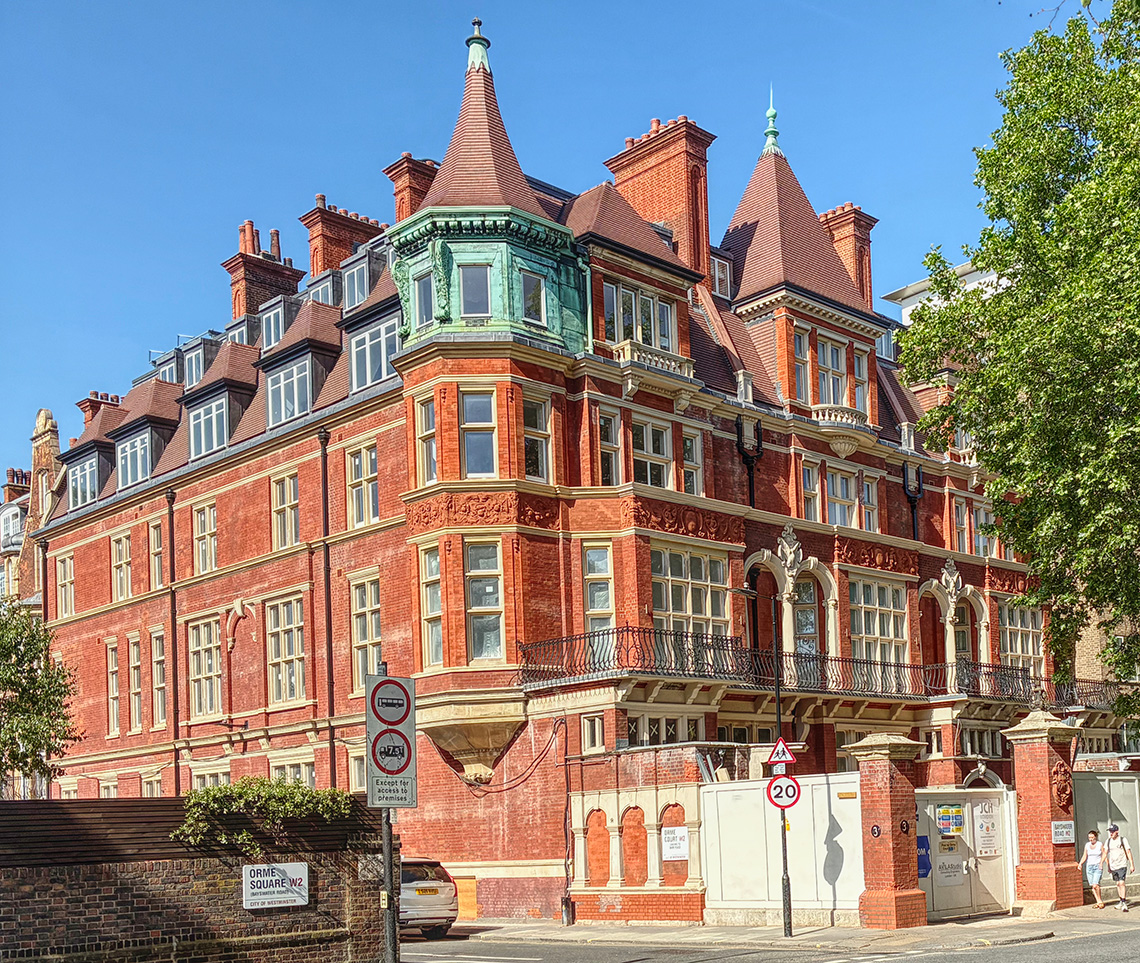
Emerging from a long period under scaffolding, 1-3 Orme Court, which faces Bayswater Road, has been beautifully restored as a very handsome building. According to the planning application, the purpose of the renovation is “amalgamation of 2-3 Orme Court with 1 and 4-8 Orme Court … to facilitate change of use to residential, religious and educational establishment for [an] international community of professionals, students and priests …”.
The Netherhall Educational Association (NEA), an educational charity associated with the international Catholic organization Opus Dei, recently acquired 2-3 Orme Court. NEA occupies multiple properties in Orme Court, including Nos. 1 and 4-8. The headquarters of Opus Dei in North West Europe are in Nos. 4-6, where it has been since 1962. Opus Dei was founded in Spain in 1928, and first arrived in London in December 1946.
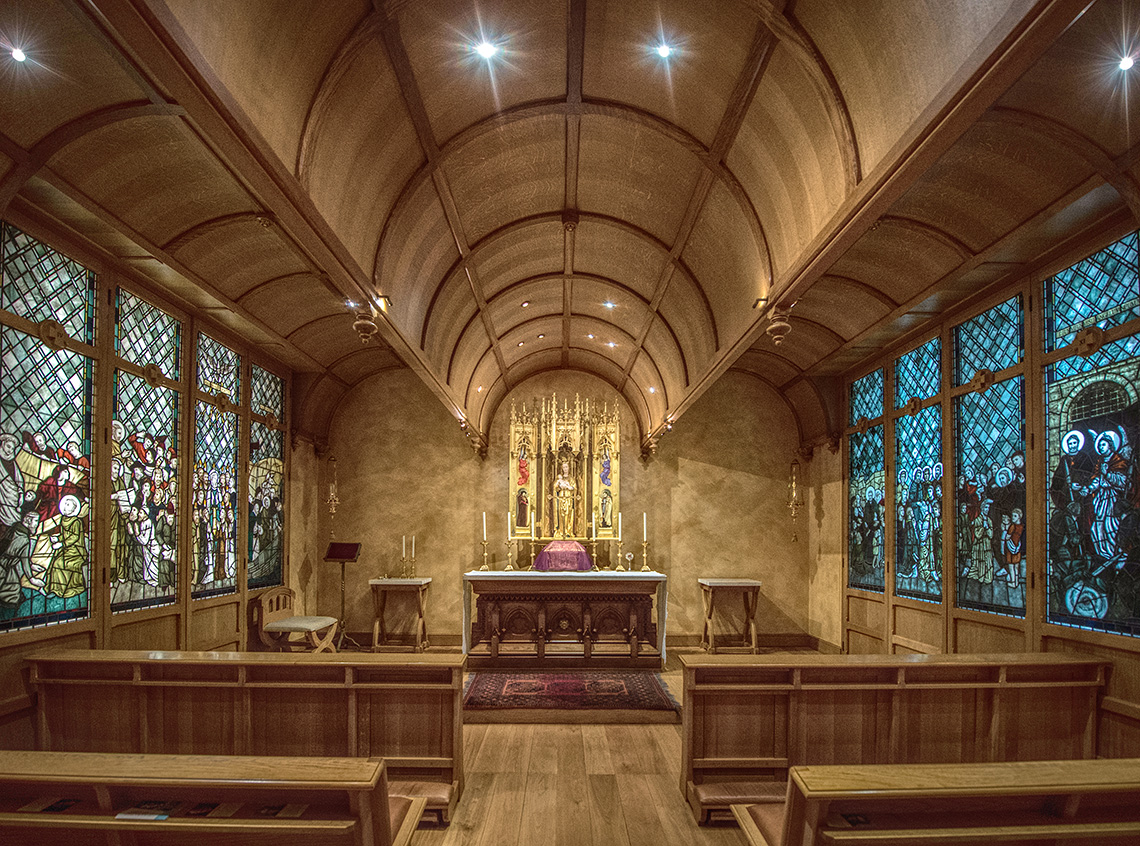
A remarkable and little-known feature of the interior of the Orme Court houses is the chapel, beautifully designed by a former BRA committee member, the architect Stephen Tsang, and opened in 2002.
Orme Court features, albeit inaccurately, in Dan Brown’s Da Vinci Code. “London’s Opus Dei Centre is a modest brick building at 5 Orme Court, overlooking the North Walk at Kensington Gardens. Silas had never been here, but he felt a rising sense of refuge and asylum as he approached the building on foot.”
Number 9 Orme Court has a very different literary associations. As its blue plaque reminds us, the building was a hub for British comedy writing. From 1992 onwards, occupants included Spike Milligan, Eric Sykes, Ray Galton, Alan Simpson and many other mid-century comedy writers. It is now being redeveloped as the Embassy of Kosovo.
Orme Court and its neighbours
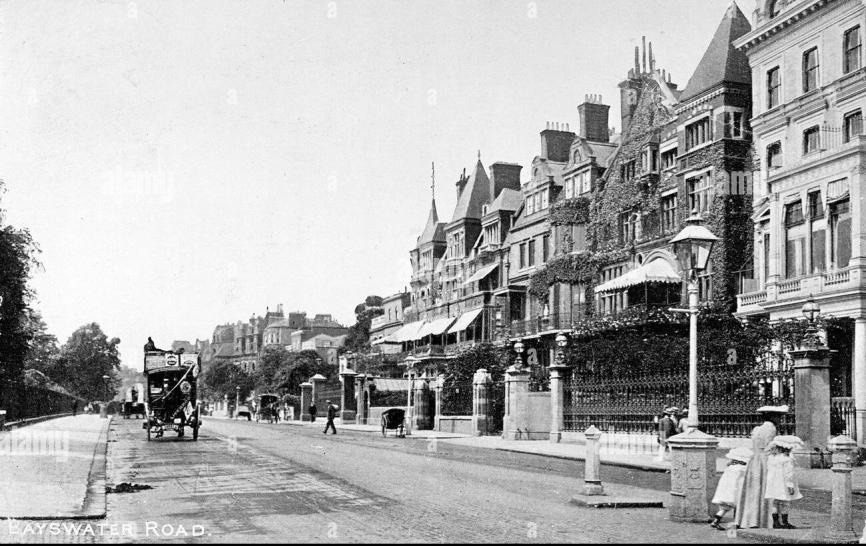
In the image below, 1-3 Orme Court can be seen in the early 1900s, at the end of an elegant range of buildings.
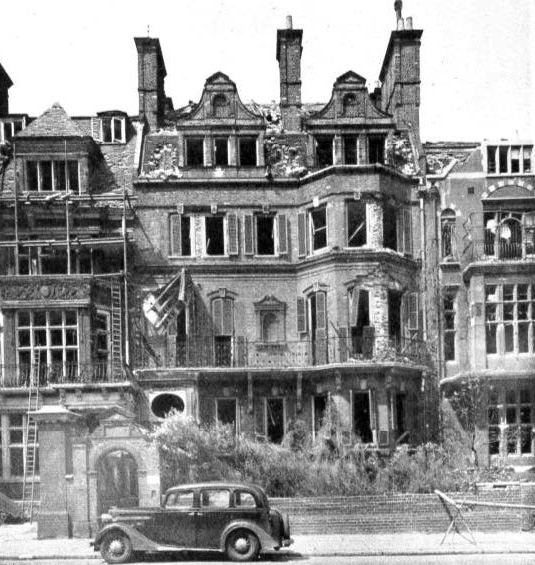
Next to Orme Court on what was then Bayswater Hill, we see the famous “Red House” built in 1871 to a design by J.J Stevenson, for his own occupation. It was a model for many of the houses on Princes Court, but was badly damaged by a flying bomb on 27 June 1944 (see image below). While Orme Court was restored, the Red House and its handsome easterly neighbours were all demolished to make way for Caroline House as part of the postwar drive to rebuild. These days, hopefully, it would have been restored.
1-3 Orme Court in the early 1900sThe Red House after the flying bomb, Orme Court to the left
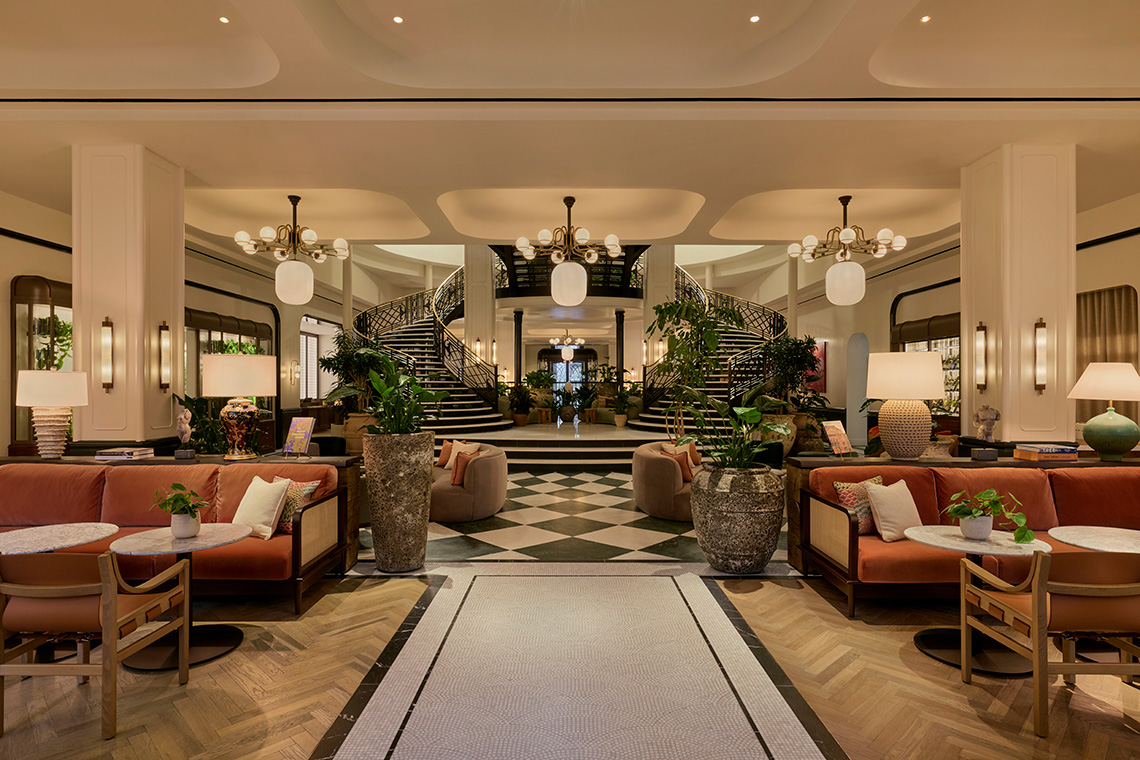
For over a century, Whiteleys has existed in Bayswater as a central space of commerce and community. The nature of the store has evolved much throughout its existence, never failing to generate controversy at each new turn. This year, it has reopened as The Whiteley, and houses the Six Senses London, a hotel which has made a public commitment to continue the building’s legacy as a centre for the community.
Whiteleys Through Time
In 1863, William Whiteley established his founding shop in Westbourne Grove, which would soon be joined by a league of others to form the first department store of its kind. By 1911, Whiteleys had been relocated to Queensway, amidst public outcry. Following serious bomb damage in 1940, the building saw nearly a decade of disuse before its refurbishment in 1949. The Grade II listed department store finally closed its doors in 1981, and stood silent for eight years. Proposals for its next life were passionately debated within the community; the Bayswater Residents’ Association were influential in backing the transformation into a shopping centre. The decision to close this shopping centre in 2018 was vigorously contested through public protests and petitions and so The Whiteley, as it is now known, has ever remained a point of contention for Bayswater locals.
During the seven-year period of construction, the loss of a community space was keenly felt by local residents, but the building’s reopening this year heralds a new beginning. Whilst the introduction of a luxury hotel might be seen as excluding the surrounding population from a building that was once a public amenity, such exclusion certainly isn’t the intention behind the Six Senses hotel’s ethos. The sustainable values central to the Six Senses brand include a deeply held commitment to community, a precedent set by its pre-existing branches and certified by the Global Sustainable Tourism Council.
Regardless of what values a website might promise, it’s easy to feel that luxury hotels are, by their nature, alienated from the local community. Yet the Six Senses London clearly would like to cross that divide, an intention which is manifested through their pledge to sustainability.
Regenerative sustainability
In recent years, ‘sustainability’ has become a buzzword tossed around so freely that it doesn’t appear to hold much weight anymore; what does it really mean to be ‘sustainable’? Especially in the hospitality industry, fraught with greenwashing and virtue-signalling, it is hard to find clarity on what sustainable policies truly provide.
The United Nations defines sustainability as ‘meeting the needs of the present without compromising the ability of future generations to meet their own needs’. At Six Senses, however, sustainability is focused on more than just the prevention of degradation; they are intent on a regenerative legacy, one that not merely neutralises its impact on its surroundings but creates a positive one.
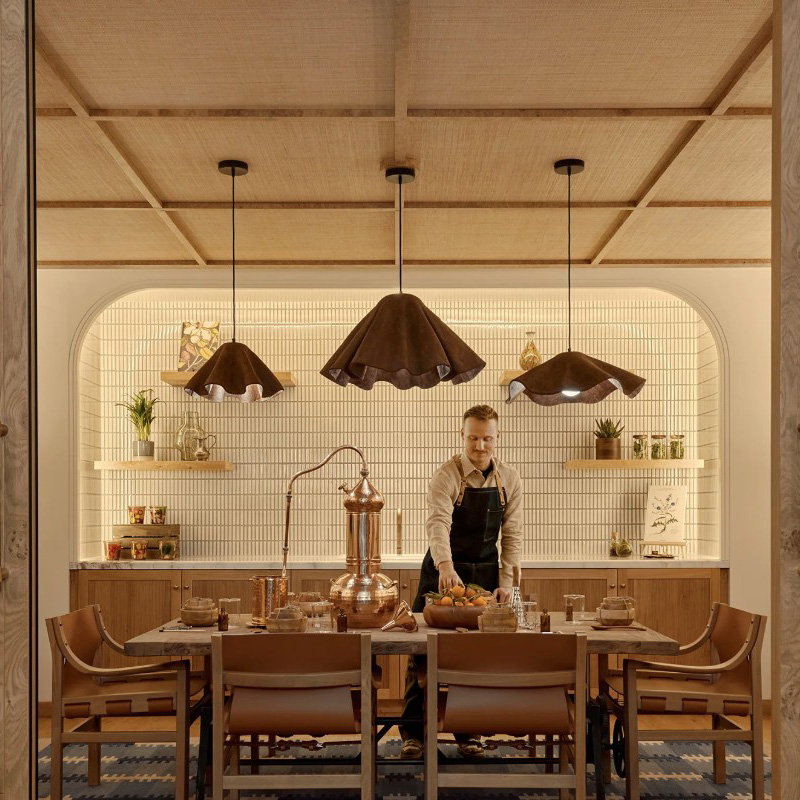
In order to understand what it means to prioritise regeneration, one can observe the circular method integrated into the hotel’s operation and promoted to their guests. In ‘Earth Lab’ workshops, guests can learn how to repurpose old cotton cloths to create reusable beeswax wrap, replacing clingfilm; save used coffee grounds to make exfoliating soap; fashion new recycled paper out of old menus.
Importantly, focus on circularity reaches further than what is marketed to clientele. Rainwater is captured and filtered to flush the building’s toilets; an in-house fermentation lab incorporates leftover food waste from the kitchens; landscaping waste is used for composting. Regeneration is embedded into the operational framework of the hotel.
Urban Environmentalism
Considering the Six Senses London, one might ask how a hotel can be so centred around the environment when placed in a city location that seems synonymous with pollution. Whereas other branches of the Six Senses inhabit remote areas receptive to the conservation efforts of the hotel -for instance, the coral reef restoration program in the Maldives- it is harder to imagine how to conduct such environmental initiatives in the urban location of London.
Step into the Six Senses and you are immediately transported out of the busy city and into an urban sanctuary, as the plants inside purify the London fumes. Housing over 1000 real plants, it feels as if the building is succumbing to wilderness- albeit a very well maintained and aesthetically coherent one. Such serenity, uncharacteristic to the bustling city life, might appear disconnected with its surroundings. However, it seems that the goal of the hotel is to create a space that belongs to and exists within the city, working within its busy system to provide a distinct but cohesive haven.
Each Six Senses hotel is moulded around the environment in which it lives, a commitment symbolised by the ‘mascot’ of every branch. For London, it’s the British butterfly. The motif of the butterfly is woven throughout the building, and although one might assume it is little more than a token, the hotel has really dedicated itself to the conservation work that the butterfly represents, with over half of British butterflies considered endangered species. Spanning 1,150 square metres across the rooftop is wild green space, providing a resting place for migrating pollinators crossing the city. Many of the plants in this space are ones chosen specifically for the benefit of British butterflies. The hope is that this pollinator sanctuary will be joined with green corridors connecting across London, such as the 14-mile stretch through East London planned by Initiative Earth and contributed to by the Six Senses London Regenerative Impact Fund.
Eco-wellness
Rather than enforcing a sustainability policy merely for metrics and guidelines, Six Senses crafts a storyline around nature and the way that we interact with it. Their ethos is one of reconnection -to the self, to others, and to the environment- and all these facets are intertwined in one symbiotic ecosystem. This is where ‘eco-wellness tourism’ comes in.
As well as foregrounding nature, health is a guiding tenet of Six Senses. Sustainability and health may not usually be treated as reciprocal, but the message prevalent within this hotel is that looking after the environment and looking after yourself come hand in hand.
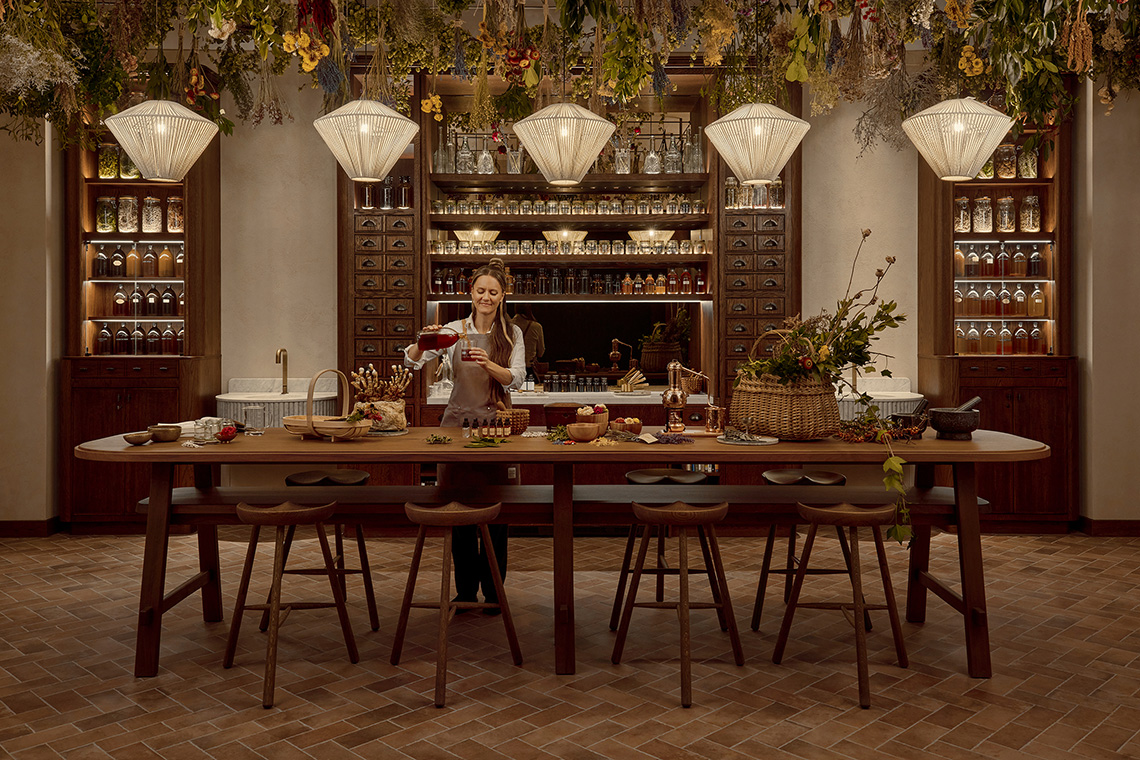
One of the main features of the hotel is the ‘apothecary bar’, where certified medical herbalists craft tinctures unique to each guest. As we begin to understand how commercial products can often pollute our own bodies as well as the environment, learning about alternative methods is essential. For this reason, the sessions in the ‘Earth Lab’ are designed not only to benefit the planet, but the person who attends them. Replacing clingfilm with beeswax wrap, for instance, reduces plastic pollution in your food as well as the environment. A core mission of the hotel is education; by teaching participants how to make alternative products themselves, environmentalism and health awareness are made accessible.
Their focus on symbiosis can illustrate why the Six Senses sustainability policy is so interested in community, and interaction with the space that it occupies. A sustainability tour is conducted for guests as a part of the weekly activity calendar, which starts by rooting itself in the history of Bayswater, remembering the lost springs and rivers which still flow beneath us.
Local Initiatives
But what does all this really mean for the locals? Whilst the work that Six Senses does for sustainability may well be authentic and effective, if the initiatives remain enclosed within its own walls, then it is hard for the community to feel an immediate impact.
Initiatives that the Bayswater community might feel more directly are driven by the hotel’s ‘Sustainability Fund’, which directs 0.5 percent of revenue to exclusively benefit and support community-based projects. Already, Six Senses is working with the Holland Park Ecology Centre to create a high-density urban forest, planting 600 trees in a neglected parklet on Elkstone Road later this year. This is just the beginning of the impact the hotel wishes to have on the local area.
With Kew Gardens as their science advisor, Six Senses will act as a keeper of local native seeds, hosting a repository which local gardens can add to and trade with.
Six Senses participated in the local recruitment event in 2025, which provided the opportunity for residents to apply for jobs in The Whiteley. A number of locals were recruited as a result, bolstering the connection between the hotel and the community.
On a broader scale, the hotel’s restaurants support UK-based food producers, with their menus adapting to seasonal availability. The Head Chef spent two years visiting farms around the South of England sourcing produce for the restaurant, forging a direct connection with the food. Local produce includes burrata made at Royal Oak, just half a mile down the road.
Connection to community
Whilst the conservation projects already initiated by the hotel evidence their commitment to local involvement, creating a relationship with the community and overcoming the current will take more time. The current disconnect between residents and the new ‘Whiteley’ is a result of years of construction and frustration, but such detachment need not continue. Six Senses London desires to be a community hub, and locals are encouraged to interact with it as such.
Although a luxury hotel can feel intimidating, it is important to remember that the hotel is an accessible space. There is nothing to stop one from stepping through the doors and admiring the grand marble staircase that we all remember from the original interior, painstakingly restored and reassembled, as magnificent as ever. In particular, the courtyard becomes increasingly enticing as summer fast approaches: although previously closed off during construction, it now welcomes locals in with outdoor seating secluded from the hubbub of the street.
Of the facilities offered by the hotel, there is much accessible to the locals. For a luxury hotel, the restaurant is designed to be very reasonably priced, especially considering the quality and traceability of the food. Similarly, the calming and unhurried atmosphere of the café creates an experience that accounts for a slightly higher cost.
Their retail boutique has been carefully curated to feature hyper-local products: many of the brands offered have connections to Bayswater, whether operating or founded in the local area. The selection encompasses a wide range of price points, from greeting cards to high-end jewellery.
The alchemy bar, which is open to walk-ins, would cost around £95 for an in-depth health consultation with resulting tinctures charged as extras. The programming team is also looking to trial special fitness classes open to Bayswater Residents.
While the Earth Lab workshops are not currently open to the public, they aim to be so later this year, and would provide a lovely activity for a group of friends or family. The session would be well worth its £30, teaching cost-effective ways to care for yourself as well as the environment.
For a hotel, the ultimate sign of sustainability is its connection with the community in which it rests. Six Senses is dedicated to forging this connection, and keen to hear from the locals. The hotel is particularly seeking ideas for itsz Sustainability Fund, or local conservation projects which would be appreciated by the community. Please contact the Bayswater Residents Association and we will ensure that Six Senses are aware of your views.
Whiteleys has shaped this corner of London for over a century — and in its latest incarnation, The Whiteley, doesn’t just revive the building but reimagines what Bayswater might be.
…. was the much smaller Bayswater Chapel, built to serve local residents when Bayswater was first developed by Edward Orme.
The population grew at an explosive rate and a much larger church was needed.
The ambitious new building was funded by John Allcroft, an ancestor of the current Patron of St Matthew’s. The church still has the ceremonial trowel with which the foundation stone was laid in June 1881.
FINALLY FUNDING THE CLEANING
A long-term ambition to remove the grit and grime of the industrial revolution from the handsome gothic façade of St Matthew’s was transformed into a reality by an extraordinarily generous bequest, amounting to about £300,000, from Peter Ferguson. A British born academic working at a US university, Peter had a house in Bark Place and was not only a congregant, but a regular volunteer at St. Matthew’s. Supplementing this bequest with other fundraising allowed the church to cover a final cleaning budget of about £450,000.
One body which notably did not contribute was Westminster City Council. Officers encouraged the church to apply for funding from the Community Infrastructure Levy (CIL) towards the cleaning of the building, as a widely-used community asset including a food bank. Despite the fact that the CIL generates substantial funds from property developers in the area of the Baywater Residents Association, and despite strong support from BRA for the cleaning project, the application was denied by Westminster. It’s a sore point that local residents have no right whatsoever to influence the use of a CIL collected in their area for the express purpose of funding local infrastructure projects.
SPECIFYING THE JOB AND FINDING A CONTRACTOR
The church building committee first asked the architect who carries out the regular five-year inspections to specify the cleaning job. This involved many hard decisions, given a finite budget. The fundamental objective was to make the church a welcoming place, not to restore it to some dazzling original state using aggressive cleaning. People will recall that not all of the church was very dirty. The decision was therefore made to focus on the dirtiest public facing facades, cleaning these to a point which blended in with parts of the building, mainly at higher levels, that did not really need cleaning – an objective which has been achieved very successfully.
Once the specification was agreed, four contactors submitted tenders and were interviewed by the building committee. The contract was awarded to Sally Strachey Historic Conservation (SSHC), who impressed with their ability to complete the job without subcontracting crucial parts of the cleaning.
SCAFFOLDING
People are no doubt aware that scaffolding is a very important, and very expensive, part of any restoration of a large building like St. Matthew’s. Scaffolders experienced in conservation projects managed to erect the very tall scaffolding with minimal obstruction of the footpaths or damage to the building.
THE WORK
Since many crucial parts of the church are built from a soft sandstone, finding the right mix of non-destructive cleaning methods was essential.
A core method was “Thermatech” cleaning with superheated water. The yellow areas in the plan below were cleaned that way. Heavily encrusted areas (pink in the plan below) needed old fashioned mechanical chipping and scraping, followed by Thermatech cleaning.
Other areas (orange in the plan) had chemical poultices applied to the stonework, which were covered with clingfilm-like sheeting then left to do their work – followed by Thermatech cleaning. These can be seen in the images below. The delicate carved areas (blue and purple in the plan below) were cleaned using lasers, although sometimes some chipping and scraping was needed first.
Quite a large part of the project involved replacement of eroded and damaged parts of the building, rather than cleaning these. Not only did the right materials have to be chosen and the replacement elements created, but the mortar used to fix these had to match the mortar of the original construction. All of this was highly skilled work.
DETAILS REDISCOVERED OR RECONSTRUCTED
BEFORE AND AFTER
FROM START TO FINISH
It took about two and a half years from the start of serious planning to the completion of the job, with a period of almost one year under scaffolding while the main work was being done.
The final landing was a bumpy ride, after it became clear the main contractor was going into administration – for reasons nothing to do with the St Matthew’s project! In order the keep everyone at work and finish the job amidst this serious uncertainty, St Matthew’s agreed to underwrite any obligations to subcontractors. This plan worked, to the immense relief of all. While the contractor did go into administration, this happened the day after the scaffolding came down.
The end result will enhance the neighbourhood for many years to come.
There is a major proposal to renovate the old dairy at 31 St Petersburgh Place, recently a marketing suite for the Whiteley, home to a Guillam Coffee house and a private office tenant. The building’s new owner proposes to make it a high quality permanent home for their worldwide operations. Guillam and the office tenant will remain in place for the medium term.
BIG architects, a globally prominent practice involved, for example, in the Google buildings at Kings Cross and Mountain View California have responded to local feedback from St Matthew’s and St Sophia’s, Chapel Side residents, BRA and SEBRA, as well as feedback from a drop-in event organised for the local community. They have now submitted an ambitious planning application. This proposal has responded to local feedback in a number of ways:
Height and Massing
The proposed roof facing Chapel Side was significantly lowered at three points to reduce its visual impact on neighbours. The high point of the roof was moved towards the centre of the massing, further away from properties on Chapel Side. Proposed views from Moscow Road, St Petersburgh Place and Chapel Side can been seen below.
View looking West from Moscow Road
View looking North from St Petersburgh Place
View looking East from Chapel side, showing lowering of roofline following consultation
<
Light Spill
In response to concerns about light spill, sensor-controlled lighting was incorporated into the scheme to ensure lights are not left on in rooms after use. Automated blinds were introduced to the relevant elevations, to mitigate the impact of light spill at night.
Overlooking
Obscured glazing was introduced along the western façades facing Chapel Side to provide a further buffer to the adjoining homes. To further respect privacy and prevent overlooking, the heights of the edge planters were significantly increased.
External Space
The plans propose local improvements to the external space to the rear of the building, between the site and 30-34 Chapel Side.
Specific Conditions
These are offered to protect the amenity of neighbours, including:
Hours for refuse/recycling collection
Hours for the depositing of refuse/recycling into the external bins
Hours for operation of the proposed retail use
Hours during which the external terraces can be used and the purpose for which they can be used
Noise limits for plant
Hours for deployment of blinds
Height and maintenance requirements for planting at building edges
The changes to the original proposal take account of many of the concerns expressed in the consultation. BRA is asking that the specific conditions listed above are made an explicit part of the planning approval.
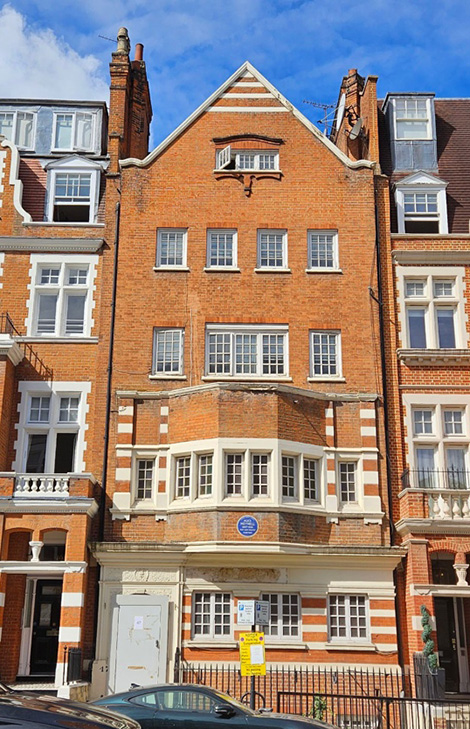
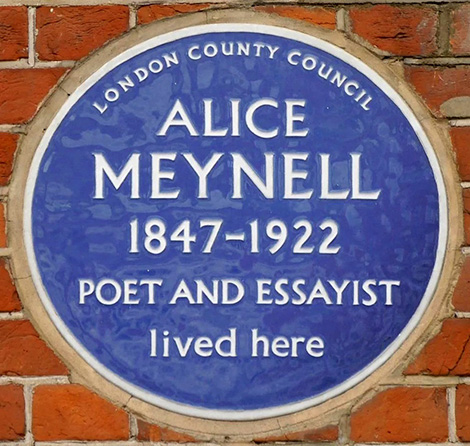
47 Palace Court, which at the time of writing is undergoing conversion by FNFC Architects into four flats, was built in 1888-89 for the Meynell family. The Meynells, Alice and Wilfrid, were important figures in the London literary world, as were some of their children. While Wilfrid was a prolific journalist, editor and publisher who became a doyen of the British Catholic literary world in particular, Alice was the major author in the family: a poet, essayist and literary critic of very distinctive talents, who was seriously proposed for the role of Poet Laureate on two occasions. She was President of the Society of Women Journalists and Vice-President of the Women Writers’ Suffrage League. Bayswater residents may have seen her name on the blue plaque at Palace Court.
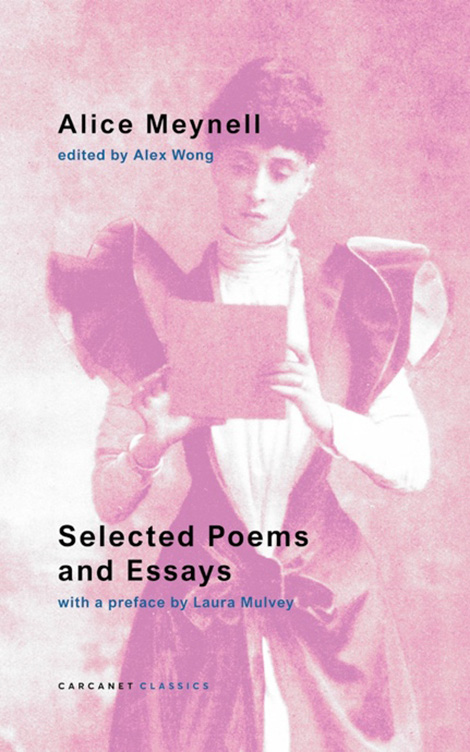
The recent publication of my edition of Alice Meynell’s Selected Poems and Essays, coinciding as it does with the beginning of works to the Palace Court house, gives me occasion to write a few words for Bayswater residents about this exceptional author, her family and her life in the area.
Alice Meynell
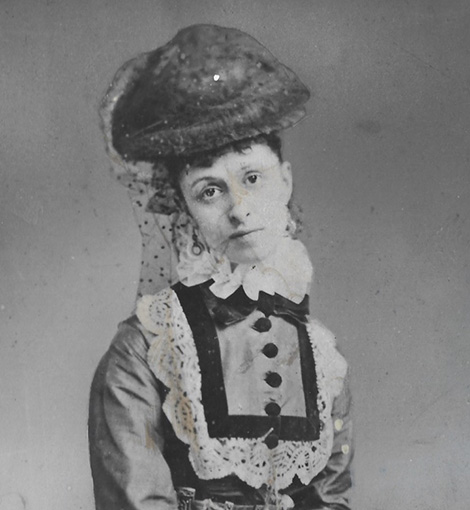
Alice Meynell (née Thompson) was born in Barnes, Surrey (now London), in 1847 to a middle-class family of artistic and intellectual persuasion. Her mother, Christiana, was a talented pianist doted upon by Charles Dickens; she gave up a musical career when she married. Thomas Thompson, Alice’s father, was brought to England as a child from Jamaica, where his father and grandfather had owned sugar plantations. Thomas is traditionally thought to have been educated at Cambridge (although records are lacking), and later was able to support his family on the inheritance from his grandfather. His mother (and therefore Alice’s grandmother), Mary Edwards, is described as ‘Creole’ and was of mixed race. Alice and her sister Elizabeth or ‘Mimi’—later Lady Butler, a celebrated historical painter—were brought up in somewhat Bohemian style, mainly in Italy and on the Isle of Wight.
In 1868 Alice, following her mother’s example, converted to Roman Catholicism—and fell in love with the young and cultivated Jesuit priest who received her into the Church. A painful break in their friendship was required, and this impossible love inspired several of Alice’s passionate early poems. Her first volume of verse, Preludes, was published in 1875 with illustrations by her sister.
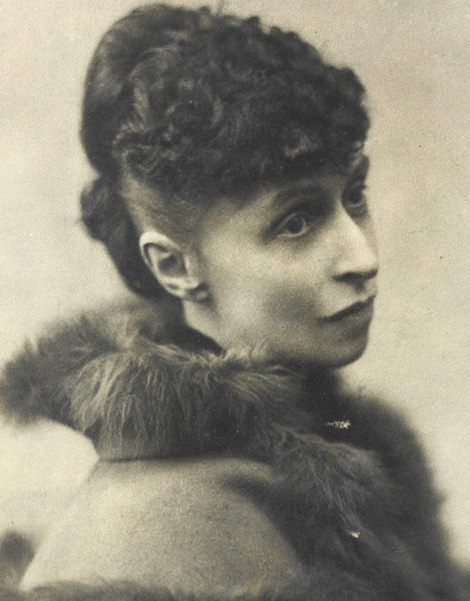
A Younger Alice Meynell
In the following year she met Wilfrid Meynell (the name rhymes with ‘fennel’), a young journalist and fellow Catholic convert who wrote to her in admiration after having read a review of Preludes. They married in 1877. Alice and Wilfrid worked both jointly and independently on various journalistic tasks, co-editing and copywriting for several periodicals as well as writing literary and critical essays, signed and unsigned, for others.
They had eight children, of whom one died in infancy. Several of the Meynell children became involved in literary life. The best known are Viola Meynell, an author of fiction (and her mother’s first biographer), and Francis Meynell, a poet and left-wing newspaper editor, who co-founded the Nonesuch Press.
In 1888 the Meynells, then residing at Phillimore Place, Kensington, had bought a plot of land in Bayswater using the inheritance from Alice’s father, and the building was rather quickly built to their specifications. Leonard Stokes, the architect they selected, was a fellow Roman Catholic whose designs took an Arts and Crafts aesthetic of variable intensity towards both neo-Gothic (especially for religious buildings) and neo-Georgian or Queen Anne styles. He did a good line in telephone exchanges, which fall into the latter category; his exchange building, for instance, on Gerrard Street (now the main drag in London’s Chinatown) was much more exciting than the 1930s replacement that still stands, while a more modest but elegant Georgian one on Gilmore Street, Lewisham, has lately undergone the same fate as that in the offing for 47 Palace Court, having been converted into luxury apartments in 2014.
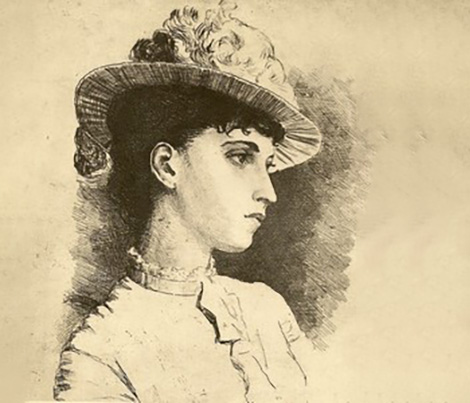
Leonard Stokes was the brother of the painter Adrian Scott Stokes, who had painted the watercolour portrait of a young Alice Thompson (still in possession of the family) that was later used for the engraved frontispiece in editions of her work.
A still younger Alice Meynell: Engraving after Adrian Scott Stokes
The house Leonard Stokes designed for the Meynells is described in an advertisement of 1906—by which time Alice and Wilfrid, now most of the children were grown up, no longer needed such a large home—as having a front elevation ‘of brick and stone in the Flemish style’. It is an elegant example of the Gothic-free side of Aesthetic Movement architectural taste. The Pevsner guide credits it with ‘much personality’.
It was in fact one of the first houses in the area to be built, and at first, before the terrace was extended, was known simply as ‘Palace Court House’. Later, as neighbouring homes appeared, it was assigned the street number 47.
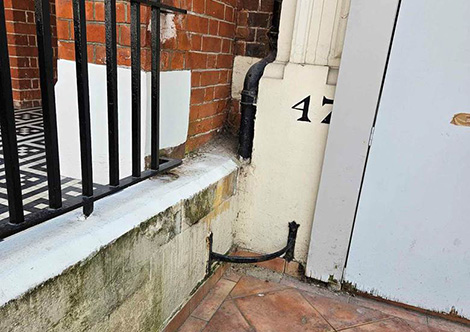
An original boot-scraper at 47 Palace Court
Alice and Wilfrid worked long hours in their new library. Although Alice would work alone upstairs on her more serious, artistic work, the relatively routine tasks of copywriting, proofreading, etc., which came in a steady stream for these two busy journalists, were conducted together in the library—where visitors, if they respected the necessary silence, were sometimes admitted. As their journalistic work was silently performed at a shared desk, the children would sometimes sit on the floor beneath them and work on their own ‘magazine’, in which, among other things, they would review their mother’s work. But another regular presence in the library, sometimes interrupting, sometimes working quietly at the same table, was the Catholic poet and critic Francis Thompson, whose poem ‘The Hound of Heaven’ is a classic of English religious verse.
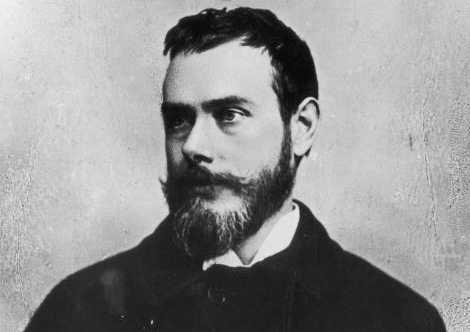
Francis Thmopson
To many modern readers, the Meynells are remembered mainly for being the protectors and advocates of Thompson, who was a homeless laudanum-addict when they discovered him and began to publish and promote his work. The Meynells supported him financially, too, a commitment that lasted for the rest of his life. Thompson was a highly eccentric character, a religious visionary and obsessional writer who struggled to get the better of his addiction and take care of his frail health. The Meynells found him lodgings quite close to their Palace Court home, where he was for long periods a daily presence.
Also a regular dinner guest for a time, until his passionate affection for Alice necessitated a break in their friendship, was another major Catholic poet of the period, Coventry Patmore, whose work she always celebrated.
Coventry Patmore
Sundays at Palace Court were days for visitors, and the visitors—not only friends, associates and admirers of Alice and Wilfrid, but also, as time went on, younger friends brought by the children—were many and varied. Among those mentioned by Viola Meynell are Oscar Wilde, the Decadent artist Aubrey Beardsley, the poet and critic Lionel Johnson (whose most famous poem today is ‘The Dark Angel’), the publisher John Lane, the Irish poet W. B. Yeats, and another Irish writer, Katherine Tynan, who lived not far away in Notting Hill. Special mention is made of the poet Agnes Tobin, ‘a beautiful Californian friend of my mother’, who ‘began in 1896 to increase the number of our visitors by more than her own presence, our other friends finding themselves unable to forgo the chance of seeing her’. It was with Agnes Tobin, and at her suggestion, that Alice Meynell travelled to and around the USA in 1901-02, where she undertook an extensive lecture tour, becoming stranded there for longer than anticipated owing to Tobin’s delicate health.
Viola Meynell also offers a description of the Palace Court drawing-room, where Sunday guests were received: ‘a pleasant room for a gathering; it was beautifully proportioned; it was panelled with old Japanese gold-thread embroideries, and a little collection of Venetian glass was bestowed on an inlaid Spanish table that had belonged to Lord Leighton’. Of her mother’s attitude to her varied and often illustrious guests, Viola tells us: ‘It was so inconceivable to her that everything should not be suitable for the entertainment of anyone who came that she offered even very plain hospitality with the slight ceremony that went with the assumption that it was good’. The implication of this nicely phrased remark is confirmed by Francis Meynell, who records that even his namesake, Francis Thompson, who (remember) had lived a hard life of vagrancy with few material luxuries, found it necessary to tell Wilfrid one day: ‘Wilfrid, the Palace Court food is shocking’.
The Meynells lived at Palace Court from 1889 to 1905, when Wilfrid, who worked at the Catholic publishers Burns and Oates, arranged for the vacant space above the firm’s offices to be converted into apartments. From the spacious Palace Court house—four storeys, a gabled attic and basement—they moved into the new, top-floor flat, in which great ingenuity was used to make the most of rather limited space. (A lift was later installed, which landed visitors in the Meynell bathroom. One assumes this will not be the case with the new lift proposed for the Palace Court redevelopment.) The Granville Place flat was situated on the corner with Orchard Street, just off Oxford Street: as far as I can work out, on the site of what is now the Oxford Street branch of Marks and Spencer. Selfridges would have been an obtrusive new neighbour a few years after their arrival.
The Palace Court property, meanwhile, was rented out and helped to supplement the Meynell family income. In 1911 the Meynell family acquired a larger house and grounds at Greatham, Sussex, which eventually became Alice and Wilfrid’s main home in their latter years and remains in the family today.
Alice Meynell died in 1922 at the age of seventy-five, while Wilfrid lived to be ninety-five and died in 1948, still at Greatham.
At this point the story is taken up by the film critic and feminist theorist Laura Mulvey, a great-granddaughter of Alice and Wilfrid, who has contributed a preface to the new anthology. In Wilfrid’s later years, Laura explains, Palace Court came back into family use. During the 1930s it was occupied by some of Wilfrid and Alice’s grandchildren who had recently left University and were working in London. These included Sylvia and Christiana Lucas (daughters of the Meynell’s daughter Madeline) and Elizabeth Sowerby (daughter of Olivia), perhaps with other relatives and friends. ‘I do know they had large parties in the Drawing Room’, Laura writes; ‘I have Sylvia’s (my mother’s) accounts of expenditure and the guest lists. As I understand it, guests paid a very small contribution to expenses which were alcohol—gin, whisky and beer, plus ginger ales, etc.—boxes of cigarettes and hire of a gramophone for dancing.’ I will give the rest in Laura’s words:
I lived at Greatham with my grandmother, Madeline, from my birth in 1941; my mother went on working, living at 47 Palace Court, until my sister Rosamund was born in 1943 when she joined us at Greatham.
Just before and during the war, the number of W&AM great-grandchildren had increased, and in its immediate aftermath 47 Palace Court provided a much-needed home for some of the families during these quite difficult times. From the top of the house:
Barbara Wall (Madeline’s youngest daughter) with husband Bernard and daughters Gabriel and Bernadine lived in the attic, occupying former maids’ and ‘help’ floor. This floor was separated from the rest of the house with its own staircase.
Hermia Eden (Olivia’s oldest daughter) with husband Peter and sons Jonathan and Sebastian, and daughter Miranda, lived on the next floor down, occupying former family bedrooms.
Grazia Meynell (Everard’s widow) lived either in the Library or the Drawing Room with the other occupied by a family friend (possibly Colin Shand).
Sylvia Mulvey (Madeline’s eldest daughter) with husband Charles and daughters Laura and Rosamund lived on the ground floor, with the former Dining Room as their sitting room (with tiny kitchen built into the well) and former Morning Room as their bedroom. I think the bathroom (leading off the hall) must have been part of the original design. The elegant staircase led down to a spacious front hall, where Rosamund and I spent a lot of time, practising our dancing and acrobatics. There was a pay-phone (Press Button A/Press Button B), that served the whole house.
George and Adelaide (caretakers) lived in the basement. George looked after the boiler and general maintenance; Adelaide probably did some cleaning. I think they had been at 47 for many years and were very friendly.
There was a small, rather gloomy, back garden (known as ‘backy yard’) where Rosamund and I played occasionally—but it lacked appeal.
At weekends we [children] went to Kensington Gardens where we played in the Children’s Playground, walked round the Round Pond and generally rambled about. This was immense fun and makes an important contribution to my memories of this time. Rosamund and I also went for walks in Kensington Gardens with our parents. I loved the Dutch Garden (with its beautiful ‘tunnel’ of arched branches) and also, very particularly, the Orangery, which has remained my idea of architectural beauty to this day.
After WM’s death in 1948, it was decided to sell 47. So far as I remember, my great-uncles Murray Sowerby and Francis Meynell were responsible for this. My grandmother was bitterly opposed to selling and her four granddaughters then composed letters of protest to Murray and Francis—probably never sent, but certainly reflecting Madeline’s view. The house was finally sold to The White Fathers, for a sum that those opposed to the sale thought inadequate, and rumours later circulated that Murray and Francis had thought that there was no future in London property. (This might well not be fair on them but the rumour definitely circulated.)
The Meynell descendants moved out of Palace Court in 1950, Laura’s immediate family moving to Clanricarde Gardens, two streets to the west of Palace Court. The White Fathers, a Catholic society, remodelled the interior and occupied the building for the next dozen years. Laura adds a postscript:
Although both our parents were so-called ‘lapsed’ Catholics, Rosamund and I were brought up as Catholics due to the strong influence of our grandmother. When we had our First Communion in the early 1950s, Madeline (or perhaps Barbara) arranged for it to take place in 47, where the White Fathers had converted the Library into a Chapel. This was a very moving return to the house (enhanced no doubt by the ceremony!) and it was the last time I was there.
47 Palace Court today
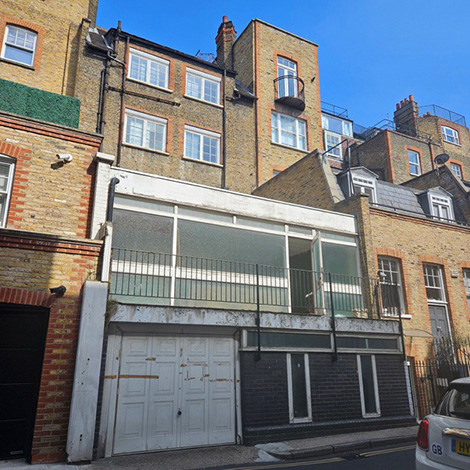
In 1963 the house passed into the ownership of another Catholic religious group, the Vincentian Fathers or Congregation of the Mission, a part of the ‘Vincentian Family’ of organisations inspired by the work of St Vincent de Paul. Again remodelled, as the planning documents show, the building was used by them until it was sold in 2021 for a sum beginning with the number 6, at which point the planning application was submitted for the renovation and redevelopment work that is currently in progress and scheduled for completion in 2028. The ‘Heritage Statement’ prepared at that time by Montagu Evans indicates that the interior had been substantially pulled about since the Meynells’ day, so that little of material historical value remains behind the elegant façade. Work to the interior will be significant, and a mews structure appended to the back of the original building will be demolished entirely. The new accommodation will comprise three apartments of two bedrooms each and a fourth containing three bedrooms.
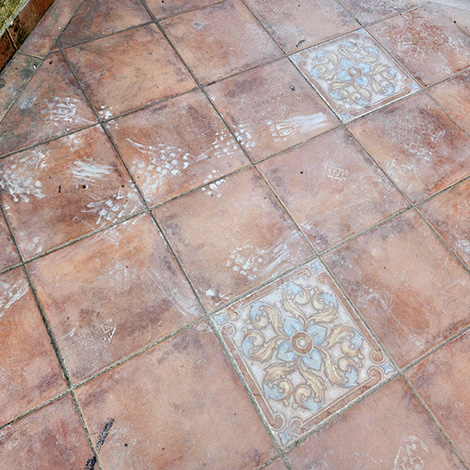
The Mews annexe (to be demolished)Builders’ footprints to the original front exterior tiling
Returning finally to Alice Meynell and her work, I close with a couple of passages that relate to her experience of London life—a topic she often touched upon in her essays for various London-based magazines, and more extensively in an 1898 book entitled London Impressions (where her text accompanies pictures by the artist William Hyde). I shall give one sample of prose and one of poetry, both included in the new anthology.
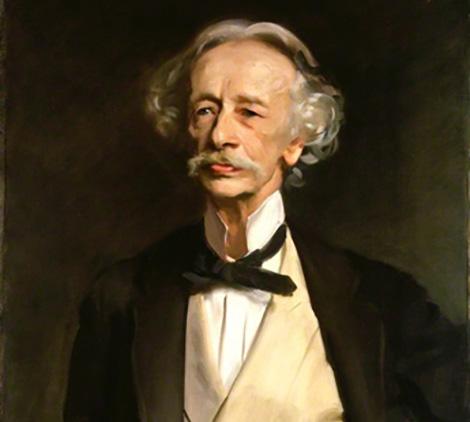
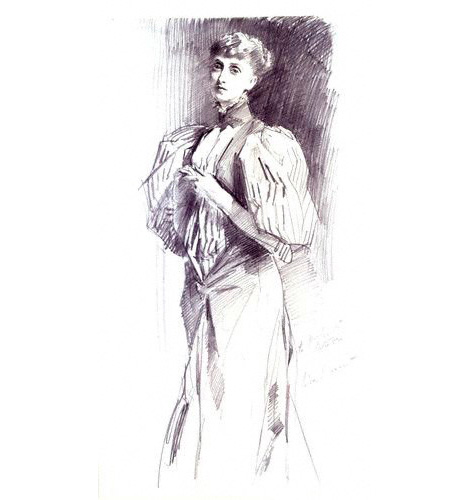
Alice Meynell by John Singer Sargent
Here is an extract from the beginning of an essay on ‘Cloud’, published while the Meynells were living at Palace Court. Members of the Bayswater Residents Association may be interested in what is now an unorthodox view of the sash window.
During a part of the year London does not see the clouds. Not to see the clear sky might seem her chief loss, but that is shared by the rest of England, and is, besides, but a slight privation. Not to see the clear sky is, elsewhere, to see the cloud. But not so in London. You may go for a week or two at a time, even though you hold your head up as you walk, and even though you have windows that really open, and yet you shall see no cloud, or but a single edge, the fragment of a form.
Guillotine windows never wholly open, but are filled with a doubled glass towards the sky when you open them towards the street. They are, therefore, a sure sign that for all the years when no other windows were used in London, nobody there cared much for the sky, or even knew so much as whether there were a sky.
She is not always, however, so pessimistic about London life. The poem ‘November Blue’, also written during the Bayswater years, starts off by deploring the lack of blue sky in modern London, where pollution blots out that ‘heavenly colour’ and even the blue-less sky is glimpsed only in the narrow gaps between closely packed buildings; but the second half of the poem seems to make a virtue of this defect. It depicts vividly the glow—a blue glow, she tells us—of a November evening by gaslight in late-Victorian London. It isn’t the natural blue of the sky, but it’s blue all the same, the ‘heavenly colour’. That is an effect one would like to have seen.
November Blue
—ESSAY ON LONDON
O Heavenly colour, London town Has blurred it from her skies; And, hooded in an earthly brown, Unheaven’d the city lies. No longer, standard-like, this hue Above the broad road flies; Nor does the narrow street the blue Wear, slender pennon-wise.
But when the gold and silver lamps Colour the London dew, And, misted by the winter damps, The shops shine bright anew— Blue comes to earth, it walks the street, It dyes the wide air through; A mimic sky about their feet, The throng go crowned with blue.
Alice Meynell was a major British author of the late nineteenth and early twentieth centuries. This is the first anthology of her verse and prose to be published for over seventy-five years. Meynell was highly regarded both as a poet and as a writer of essays and was seriously proposed for the laureateship on two occasions. G.K. Chesterton said of her that she ‘never wrote a line, or even a word, that does not stand like the rib of a strong intellectual structure; a thing with the bones of thought in it’.
The present selection includes the early romantic poems of yearning, full of poignant surprises, and the terser, less personal poems of her maturity. Also included is a broad sample of Meynell’s literary essays, in each case a careful work of art. They include reflections on literature, culture and the natural world, nuanced observations on childhood, and moving defences (both specific and general) of women against trespasses on their dignity.
This selection, made and introduced by Alex Wong, also includes an appreciative preface by the renowned feminist critic and theorist Laura Mulvey, who is the author’s great-granddaughter.
While just outside the BRA area, on the opposite side of the road from the Whiteley’s development, this is a major proposal that will dramatically change the face of Queensway.
A previous owner obtained planning permission for demolition and redevelopment of the site. A new owner recently submitted a new proposal. This sits within the massing of the already consented development, but switches the emphasis from offices to housing. It also substantially increases the proportion of high quality, on-site, affordable housing. The ground floor will continue to be devoted to retail.
We feel the proposed building is too high, but there is already planning permission for a building of the same height and massing, so any objection on these grounds is very unlikely to succeed. We very much welcome the increased provision of high quality affordable housing on-site.
The full application can be viewed on the Westminster Planning portal:
This development site is large and encompasses 86 to 96 Westbourne Grove, Hereford Mews and 28 to 38 Hereford Road
The Existing Site
View of Hereford Road and Westbourne Grove Junction88-94 and 98 Westbourne GroveExisting view from Hereford Road looking towards the site
The Proposals
Illustrative view of the proposals looking north-east
The proposals, as illustrated above, would provide 29 new homes of a range of sizes onsite and offsite social housing. At ground and basement level on Westbourne Grove there would be new retail, food and beverage space.
Hereford Mews would be rebuilt, with a wider entrance from Hereford Road to allow fire engine access. A new red brick mansion block is proposed for Hereford Road.
Westbourne Grove - Proposed ElevationHereford Road - Proposed Elevation
Hereford Mews
Illustrative sketch of the mews looking north - front doors activate the space.Pilbrow & Partners - The Kensington Building
The design inspiration and materials for the proposed Westbourne Grove façade are similar to Pillbrow & Partners’ Boots building in Kensington High Street.
Hereford Road - Red Brick BoundaryHereford Road current - narrower building, simplified and reduced roof.
There have been a number of meetings between the developers and local residents’ associations over recent months. Concerns have been raised on the height, design and materials of the Westbourne Grove façade; the size and justification for the double basement beneath the entire site; the nature of the retail and other uses for the basements; the size, design and materials of the Hereford Road mansion block; greening opportunities/net biodiversity gain proposals for the whole site.
Further Information and Feedback
The developers’ public consultation and information boards can be found by following this link.
Development proposals at Dukes Court, corner of Queensway and Moscow Road - Westminster planning application ref: 24/08764/FULL - Link Here
View from Southeast on QueenswayView from Northeast on Queensway
Westminster City Council recently rejected development proposals at Dukes Court, a tired and plain 1960s building at the corner of Queensway and Moscow Road (ref 4/08764/FULL). These proposals involved major upgrades to the façade of the existing building, the addition of two extra floors and a roof terrace, and a new Mews house in the rear courtyard
The developers consulted with BRA and made significant refinements and improvements to the designs. We remained concerned by the impact of the proposals on existing flats in Duke’s Court itself and neighbouring Alexandra Court on Moscow Road, as well as the low quality of the new housing provision in the mews house, and lodged an objection which can be found by following this link. Objections were also raised by Bayswater Councillor Maggie Carman and Lancaster Gate Councillor Ellie Ormsby.
A new application was almost immediately submitted by the developers (25/04299/FULL), addressing the main reasons for refusal by Westminster. This proposal drops the mews house entirely, while retaining the façade renovation and two-story mansard roof extension and roof terrace of the original application (see illustrations below). The former Barclays Bank premises at ground floor level would be converted to one or more retail units.
Queensway Street View - Looking South
Queensway Street View - Looking NorthSketch view of Queensway commercial shop fronts
While Geoffrey de Mandeville, one of the Norman Conquerors, owned the land south of what is now Bayswater Road, the area to the north was almost certainly named after another of the Norman Conquerors, Bainiardus. Bainairdus was the feudal baron of Dunmow in Essex, although he is chiefly remembered for Baynard’s Castle, a Norman fortification on the Thames which was later reconstructed as a royal palace.
The scholarly journal Notes and Queries, contains this quote by Victorian historian John Timbs:
“Bainiardus held land here of the Abbot of Westminster; and in a grant as late as 1653 is described ‘the common field at Paddington’ (now Bayswater Field), as being, ‘near to a place commonly called Baynard’s Watering.’ Hence it is concluded ‘that this portion of ground, always remarkable for its springs of excellent water, once supplied water to Baynard, his household, or his castle; that the memory of his name was preserved in the neighbourhood for six centuries;’ and that this watering-place is now Bayswater.”
Bays Water or Bayswater conduit, 1775.
There are other, more fanciful, theories about Bayswater’s name. Some think it derived from one of the local rivulets, or perhaps a public house kept by a Mr Bays, or even from bay horses which quenched their thirst there. At any rate, it was recorded as Bayard’s Watering Place in 1380. The abundance of gravel pits, streams and springs being its most notable feature. Along with fresh water sources such as in Conduit Field, a stream called the Kilburn rose in Hampstead and passed under the Uxbridge (Bayswater) Road at what later became the Lancaster Gate entrance to Kensington Gardens. It was here known as the Bayswater rivulet, and later the Westbourn or Westbourne, so that by the eighteenth century the area was generally known as Bayswatering, although the name Bayswater was used as early as 1659.
Bowles Geographicus, Pocket Map of London, 1785, when development outside the Square mile of the city still barely extended for more than a few hundred yards north and east beyond the walls, and was bounded by Southwark in the south and Park Lane in the west.
More Watery Tales
By the nineteenth century the waterway had been confined to underground culverts and become a sewer, but for centuries the now lost river was cherished for its sweetness and purity. In 1439 permission was given by Westminster Abbey for a conduit to be built to supply drinking water to the City of London, and eighteenth-century illustrations show the head of the spring encased in a circular building with a pepperpot turret. Despite a plaque in Hyde Park which claims the water was ‘from this spot’ south-east of the Serpentine, most other descriptions place the head of the spring, ‘in a meadow opposite the north side of Kensington Gardens’, near to ‘Bay’s Water Tea Garden’.
Flora tea gardens, showing the wooden bridge over the Westbourne immediately north of today’s Italian Gardens.
The abundant water frequently made the main road almost impassable with mud and even flowing water, especially at the depression north of what became the Serpentine where the Westbourne or Bays Water crossed the road. In 1675 this stream was spanned by a brick bridge, which had been replaced by a stone one by 1769.
There were scattered farms, some growing watercress, as well as inns along the road, and small settlements to the west of what is now Lancaster Gate. Gravel had been dug from these parts since at least the thirteenth century, which is why the entire stretch between today’s Queensway and Notting Hill Gate tube station was known as Kensington Gravel Pits. Despite exploitation of the gravel on both sides of the main road, the area remained picturesque, with the tea house and the fields around dotted with nursery grounds and market-gardens.
By the turn of the seventeenth century Bayswater and beyond proved the perfect rural retreat for the super-rich, and between 1605 and 1620 three great Jacobean houses were constructed here. Cope Castle, built by Sir Walter Cope, later passed by marriage to the Lord Holland, 1st baron of Kensington and became known as Holland House. It was set in 500 acres of grounds some of which survive as Holland Park, although the building was largely destroyed by incendiary bombs in 1940. Campden House was built, or perhaps remodelled from an Elizabethan building, by Sir Baptist Hicks, later Viscount Campden, who owned more than 100 acres between Abbotts Kensington and Notting Barns. The house burned down in 1867.
Cope Castle, later Holland House, which became a girls’ school, before World War II.
Most importantly though was a mansion built for Sir George Coppin and later called Nottingham House. In 1689 it was acquired by William and Mary as a retreat from Whitehall Palace, their official residence on the Thames. The fresh country air was a godsend for the asthmatic King William III since, ‘The Smoak of the Coal Fires of London much incommoded his Majesty’.
A Royal Palace
Christopher Wren was hired to transform the property into a royal residence and, renamed Kensington Palace, it became a favourite home of British monarchs. Queen Mary died within its walls in 1694, as did her husband, King Billy, eight years later, after which ‘Good-hearted’ Queen Anne took over and formalised the gardens in front of the palace. Princess Victoria was born there in 1819 and of course more recently one of British royalty’s many tragic figures, Princess Diana, lived there and was mourned there with fields of flowers in 1997.
Kensington Palace in 1724…
The Serpentine was formed in 1730 by building a dam across the Westbourne which made the magnificent grounds even more attractive to the public, but visitors to the park, like those to the palace, mostly entered from the south. So while the royal route from Whitehall to the palace and on to Windsor brought traffic to Kensington High Street, there was little development along the ancient road leading out from London north of the park.
Medical Matters
In fact in 1734 Bayswater’s continuing seclusion, so quiet and yet so close to the metropolis, made it a suitable place for a pest house, or pestilence or plague house, the equivalent of an isolation hospital. These were grim places often used for forcible quarantine of people with cholera or other infections, but also with an eye to true pandemics. This was, after all, within living memory of London’s great bubonic plague. The infirmary was established in 1734 by Lord Craven on land bought the previous year from Upton Farm, ‘at the end of a tree-line lane,’ just east of Westbourne Green Lane (now Queensway), and it replaced the pest house in Carnaby Market where land was becoming expensive. The asylum itself was a long building with several enclosures set in fields well back from the Uxbridge road. But presumably it was gone by 1795 when a group of new houses called the Craven Estate was ‘very pleasantly situated’ not far away on a slight rise known as Craven Hill.
A Sparsely Populated Passing Place
A little further to the west was the biggest property facing the main road, Shaftsbury House. But, apart from the royal palace, along with a brick works to its west, and a few outhouses, there were scarcely two dozen other buildings scattered between what today are Lancaster Gate and Notting Hill. Quiet though it was, there was sufficient traffic to sustain several inns. There was a pub called The Crown at today’s Lancaster Gate in the 1600s and a tavern nearby called the Saracen’s Head, replaced by the Swan Inn, which opened in 1775 and survives opposite the Italian Gardens just west of Lancaster Gate.
The Swan in 1795 looking towards Orme Square. (Note the wall around Hyde Park built by Charles II in the 1660s)…
The Oxford Arms alehouse was opened in 1704 opposite what is now Queensway Station and around 1751 was renamed the Black Lion Inn, giving its name to Black Lion Lane and later Blackman Lane (now Queensway and formerly Westbourne Green Lane), and to the Black Lion entrance to Kensington Gardens.
Despite these development, Bayswater was a place to pass through rather than a settlement. The whole area including hamlets like Westbourne Green and Paddington Green contained at most a few hundred souls.
According to the historian George Rousseau:
“Bayswater in 1760 still consisted of green fields dotted with cow sheds and a few houses. Even a generation later, when the composer Josef Haydn retreated there in 1791, he called it ‘rural Paddington’. Its fields dipped and rose and were prone to flooding [but] provided its inhabitants could endure wet cellars and rooms, it seemed a small paradise. During the 1760s market gardeners and nurserymen found it pastorally seductive because they could plant and grow surrounded by plenty of space and pure air. The land was cheap to buy as well as rent.”
In 1791 the pure air and cheap land enticed the General Lying In Hospital to move from Jermyn Street to Bayswater, near to The Swan Inn. In 1809, having secured the support of the Duke of Sussex, it was renamed Queen Charlotte’s Lying-In Hospital, taking its name from the wife of King George III. It was an unusual and controversial institution since, intended for the poor (the rich were attended to in their own homes), it admitted both married and single women, an unusual arrangement at the time.
By the Gates of Kensington Gardens’, by William Crotch dated May 1816.*
A little to the west there were substantial farm buildings at the junction of today’s Bayswater Road and Queensway. A sketch by William Crotch (above) dated May 1816 shows the view east towards the city, with the turnpike guard house beside a flooded ditch and the old brick wall that enclosed the park.
And thus, as we reach the turn of the 19th century our first article concludes, but you can expect a follow-up piece bringing us up to modern-day Bayswater later in 2024.
Our thanks go to The Orme Square Association, particularly to its Chairman Mr Nick Ross, for permission to source this article from “The Square – A History of Orme Square – The First 200 Years