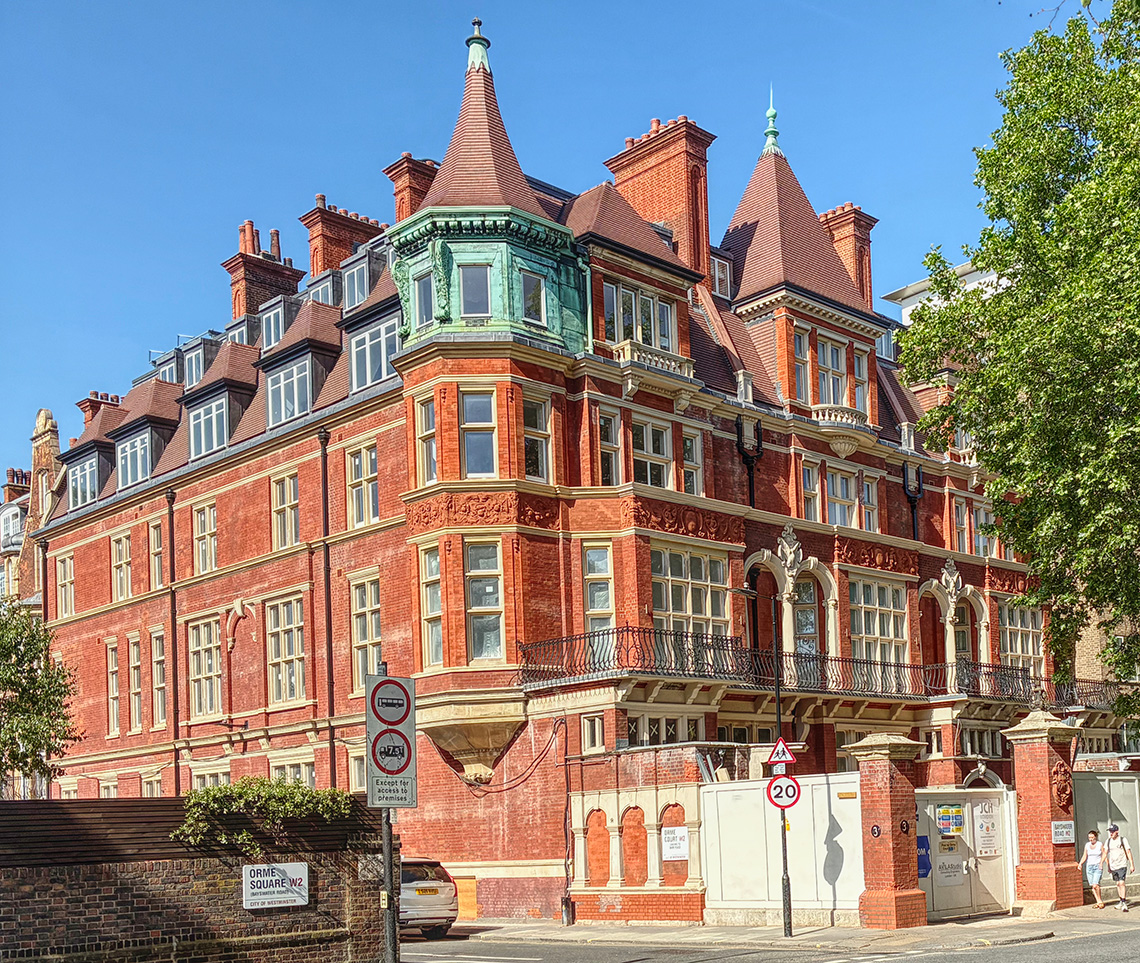
Emerging from a long period under scaffolding, 1-3 Orme Court, which faces Bayswater Road, has been beautifully restored as a very handsome building. According to the planning application, the purpose of the renovation is “amalgamation of 2-3 Orme Court with 1 and 4-8 Orme Court … to facilitate change of use to residential, religious and educational establishment for [an] international community of professionals, students and priests …”.
The Netherhall Educational Association (NEA), an educational charity associated with the international Catholic organization Opus Dei, recently acquired 2-3 Orme Court. NEA occupies multiple properties in Orme Court, including Nos. 1 and 4-8. The headquarters of Opus Dei in North West Europe are in Nos. 4-6, where it has been since 1962. Opus Dei was founded in Spain in 1928, and first arrived in London in December 1946.
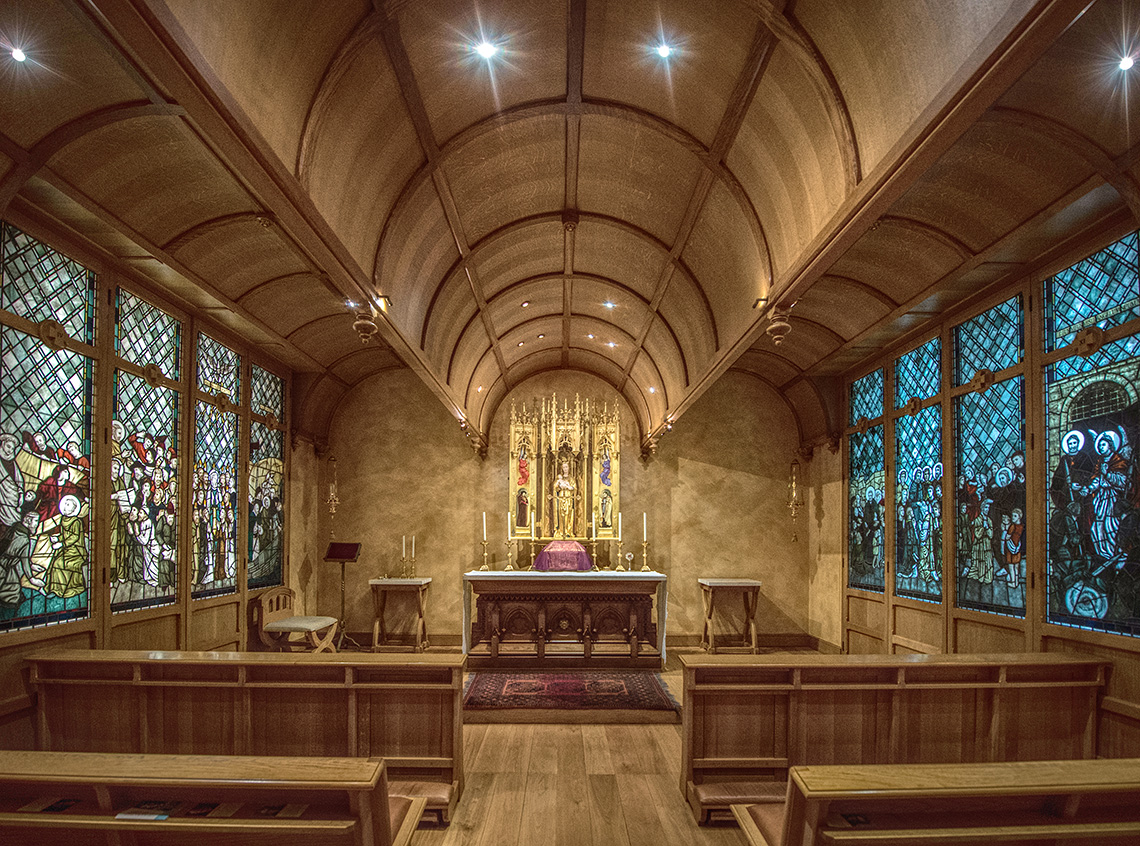
A remarkable and little-known feature of the interior of the Orme Court houses is the chapel, beautifully designed by a former BRA committee member, the architect Stephen Tsang, and opened in 2002.
Orme Court features, albeit inaccurately, in Dan Brown’s Da Vinci Code. “London’s Opus Dei Centre is a modest brick building at 5 Orme Court, overlooking the North Walk at Kensington Gardens. Silas had never been here, but he felt a rising sense of refuge and asylum as he approached the building on foot.”
Number 9 Orme Court has a very different literary associations. As its blue plaque reminds us, the building was a hub for British comedy writing. From 1992 onwards, occupants included Spike Milligan, Eric Sykes, Ray Galton, Alan Simpson and many other mid-century comedy writers. It is now being redeveloped as the Embassy of Kosovo.
Orme Court and its neighbours
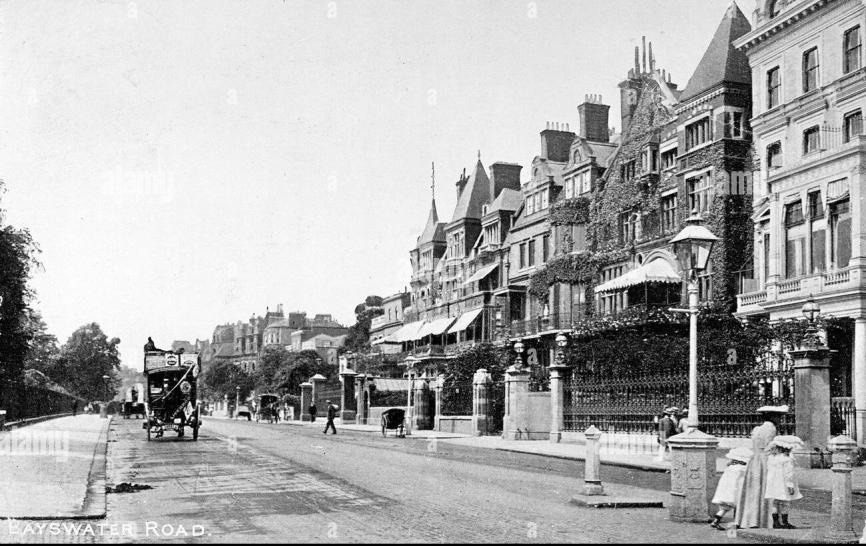
In the image below, 1-3 Orme Court can be seen in the early 1900s, at the end of an elegant range of buildings.
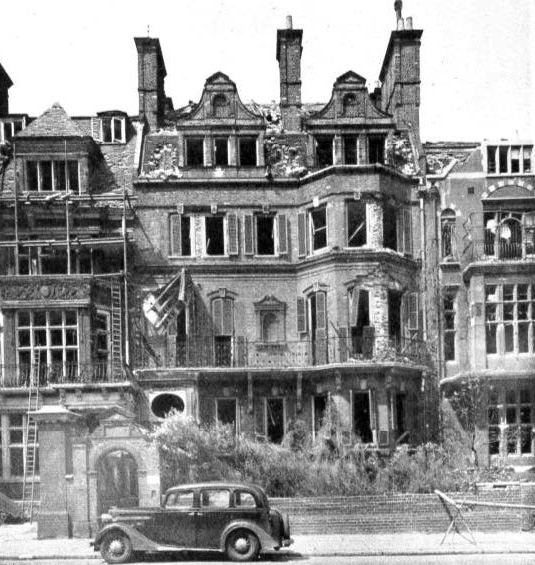
Next to Orme Court on what was then Bayswater Hill, we see the famous “Red House” built in 1871 to a design by J.J Stevenson, for his own occupation. It was a model for many of the houses on Princes Court, but was badly damaged by a flying bomb on 27 June 1944 (see image below). While Orme Court was restored, the Red House and its handsome easterly neighbours were all demolished to make way for Caroline House as part of the postwar drive to rebuild. These days, hopefully, it would have been restored.