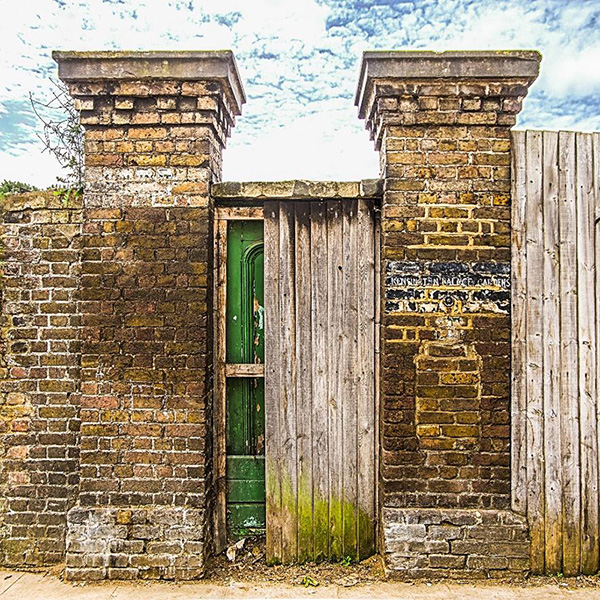
How did some of the grandest houses in Bayswater turn into a coach park? What tragedy allowed 1-3 Kensington Palace Gardens (KPG) …
… to be bulldozed into this?
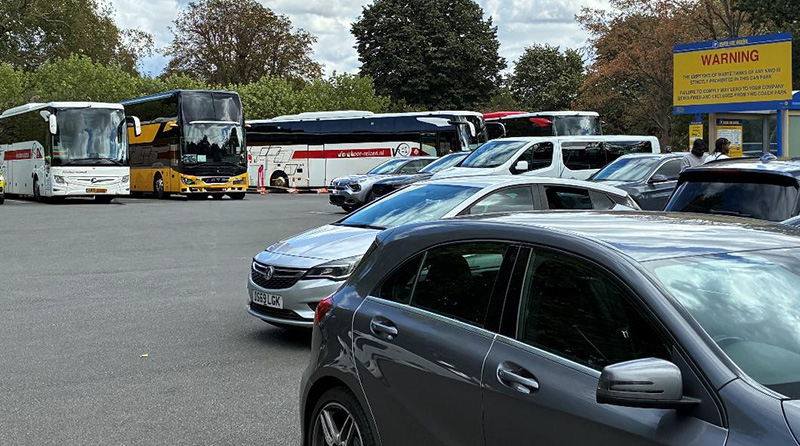
The answer is surprising: 1-3 KPG were casualties of a Cold War property exchange between British and Soviet governments that stalled for 30 years. What’s now a coach park was intended to be the Soviet Embassy in London.
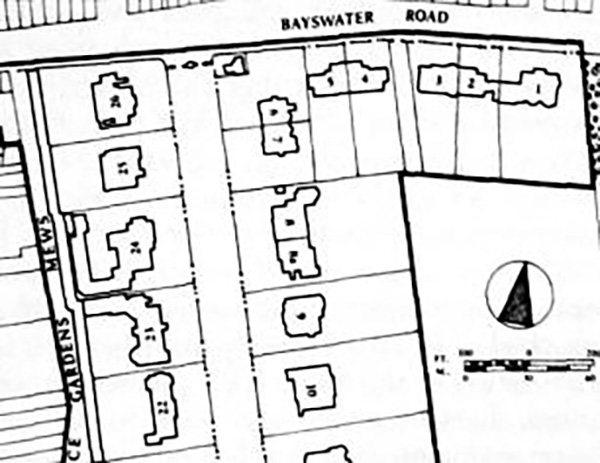
The pedigree of these houses is well-known. 1-3 KPG, facing Bayswater Road, were developed by Samuel W. Strickland between 1844 and 1846, on plots leased from the Crown Estate, which was developing Kensington Palace Gardens as a revenue stream. Semi-detached 2-3 KPG were modelled on 4-5 KPG (now occupied by the Russian Embassy) – also developed by Strickland. A more ambitious detached house at No 1 KPG was designed by Henry Duesbury, and was originally occupied by Charles Lushington, MP.
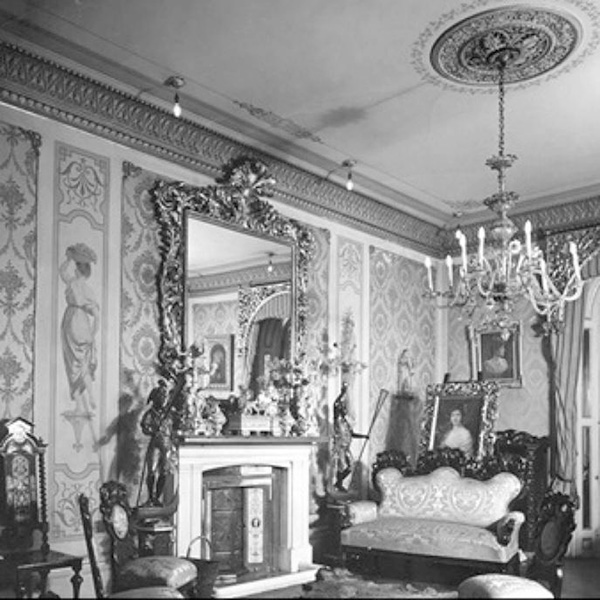
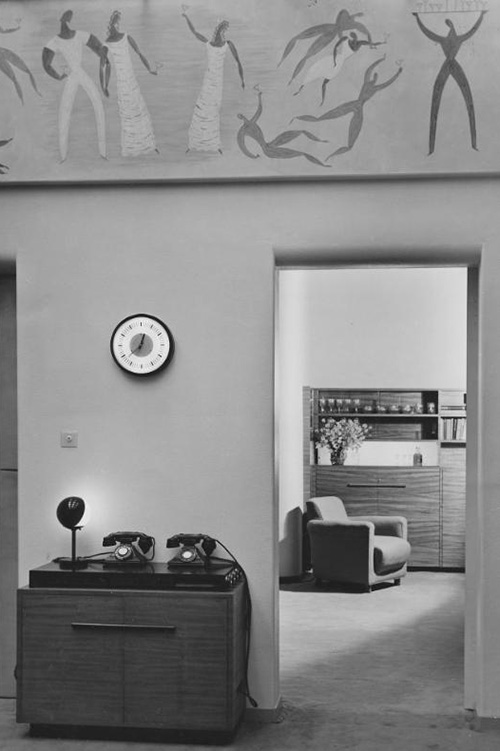
1 KPG featured in the Architectural Review of July 1932, which documented its remodelling into a radically modern space by the prominent architect Wells Coates for the then owners, Patricia and George Strauss. George had inherited the property from his father Arthur. He was Minister of Supply in the Atlee government, and Father of the House of Commons from 1974 to 1979. Patricia, was a former artists’ model and keen patron of the arts (owning sculptures by both Henry Moore and Barbara Hepworth). A noted feminist and Labour politician, her portrait is in the National Portrait Gallery. Link: Patricia Strauus
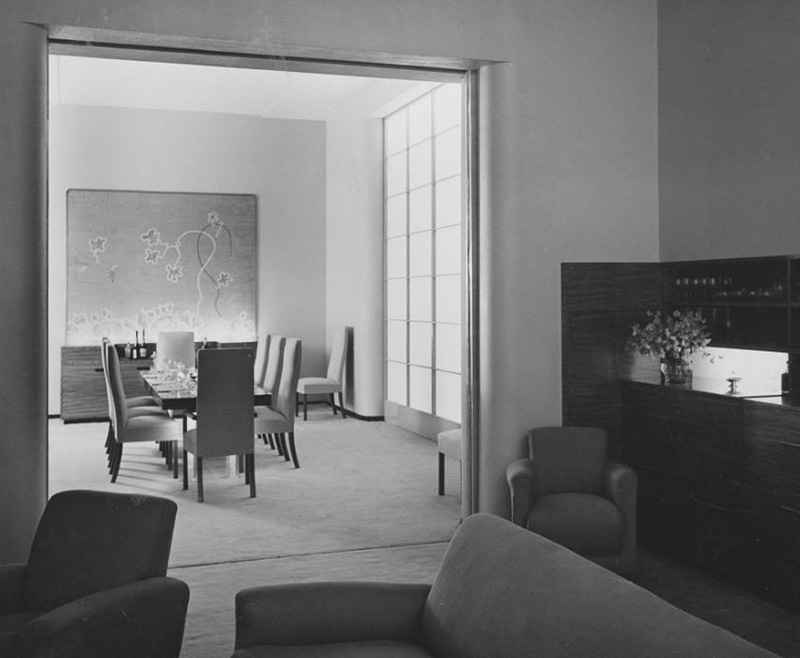
Coates’ remodelling project was a key early example of the modernist movement in British architecture. He stripped the interiors of Victorian clutter and replaced this with a minimalist open design: whitewashed walls; sliding silk screens instead of fixed interior walls; complemented by minimalist furniture. All of this is now gone, which seems a huge loss.
While the coach park looks like a former bomb site, aerial photography from 1946 shows that 1-3 KPG were untouched by the war.
Survey of London, compiled c 1972, simply states “Nos. 1–3 demolished”, so they were already gone by then. What happened between the Strauss’s avant garde remodelling of their grand family home and the wrecking ball has to do with cold war diplomacy.
The search for a new British embassy site in Moscow became formally linked, from 1964, to the Soviet desire for new sites in London. This was resolved in 1965, when the Soviets were offered and accepted a 1.05-hectare site at 1–7 KPG. The Foreign and Commonwealth Office subsequently paid £8.25m to the Crown Estate Commissioners for a 99-year lease on the site. Nos. 1–3, at the Bayswater Road end, sat on the part of the assembled plot earmarked for a brand-new Soviet embassy complex, and the reciprocal arrangements explicitly required cleared sites. The British government already owned 6-7 KPG, since it had formed part of the infamous “London Cage” secret WW2 interrogation centre. In other words, 1–3 KPG were demolished to deliver vacant land for redevelopment that was highly sensitive, diplomatically. It’s not clear on what terms the Strausses gave up the home in which they had invested so much, although George was a senior politician throughout this period.
In the event, this redevelopment never happened. The Soviet scheme was repeatedly stalled through the 1970s by Kensington planning opposition. The Kensington Society’s 1984 annual report talks about 1–7 Kensington Palace Gardens as a “proposed Russian development” of the site, noting planning conditions that coach-park use should have been temporary (to cease over 40 years ago on 30 November 1983!). A 1987 Sites Exchange Agreement finally resolved matters, but by this point the USSR was approaching collapse. Various Russian schemes to develop their site of Nos. 1–3 failed, given disagreements with
the freeholder, the Crown Estate. The Russian presence was then focussed on retaining 4-5 KPG in their present, somewhat unloved, state and the demolition and rebuilding of 6-7 Kensington Palace Gardens, where it can now be seen. The cleared plot at 1-3 KPG simply stayed cleared. The coach park is the fossil of an embassy that was never built.