
By Cressida Massey-Cook
For over a century, Whiteleys has existed in Bayswater as a central space of commerce and community. The nature of the store has evolved much throughout its existence, never failing to generate controversy at each new turn. This year, it has reopened as The Whiteley, and houses the Six Senses London, a hotel which has made a public commitment to continue the building’s legacy as a centre for the community.
Whiteleys Through Time
In 1863, William Whiteley established his founding shop in Westbourne Grove, which would soon be joined by a league of others to form the first department store of its kind. By 1911, Whiteleys had been relocated to Queensway, amidst public outcry. Following serious bomb damage in 1940, the building saw nearly a decade of disuse before its refurbishment in 1949. The Grade II listed department store finally closed its doors in 1981, and stood silent for eight years. Proposals for its next life were passionately debated within the community; the Bayswater Residents’ Association were influential in backing the transformation into a shopping centre. The decision to close this shopping centre in 2018 was vigorously contested through public protests and petitions and so The Whiteley, as it is now known, has ever remained a point of contention for Bayswater locals.
During the seven-year period of construction, the loss of a community space was keenly felt by local residents, but the building’s reopening this year heralds a new beginning. Whilst the introduction of a luxury hotel might be seen as excluding the surrounding population from a building that was once a public amenity, such exclusion certainly isn’t the intention behind the Six Senses hotel’s ethos. The sustainable values central to the Six Senses brand include a deeply held commitment to community, a precedent set by its pre-existing branches and certified by the Global Sustainable Tourism Council.
Regardless of what values a website might promise, it’s easy to feel that luxury hotels are, by their nature, alienated from the local community. Yet the Six Senses London clearly would like to cross that divide, an intention which is manifested through their pledge to sustainability.
Regenerative sustainability
In recent years, ‘sustainability’ has become a buzzword tossed around so freely that it doesn’t appear to hold much weight anymore; what does it really mean to be ‘sustainable’? Especially in the hospitality industry, fraught with greenwashing and virtue-signalling, it is hard to find clarity on what sustainable policies truly provide.
The United Nations defines sustainability as ‘meeting the needs of the present without compromising the ability of future generations to meet their own needs’. At Six Senses, however, sustainability is focused on more than just the prevention of degradation; they are intent on a regenerative legacy, one that not merely neutralises its impact on its surroundings but creates a positive one.
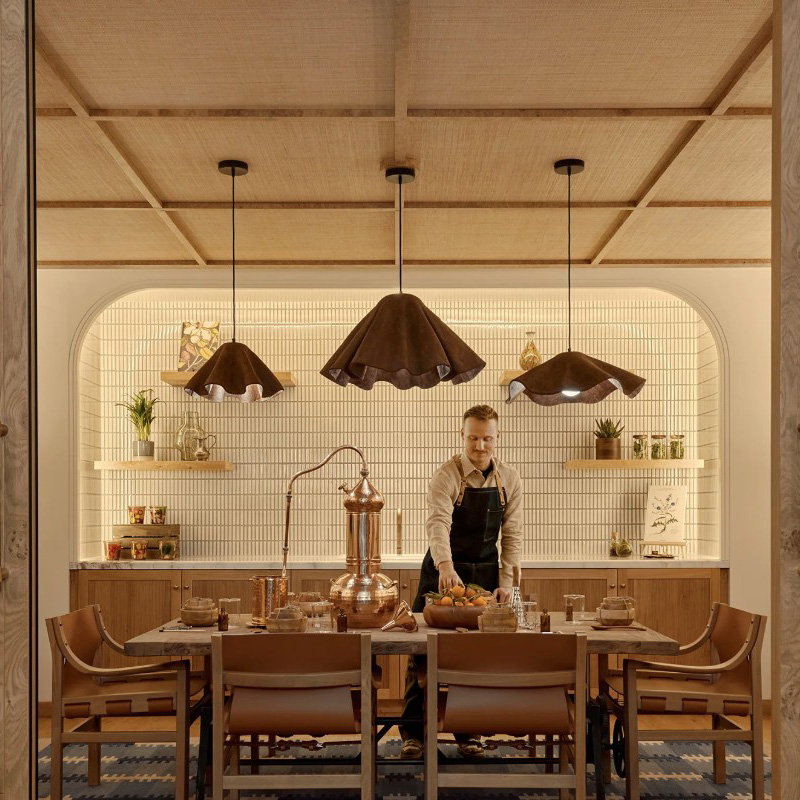
In order to understand what it means to prioritise regeneration, one can observe the circular method integrated into the hotel’s operation and promoted to their guests. In ‘Earth Lab’ workshops, guests can learn how to repurpose old cotton cloths to create reusable beeswax wrap, replacing clingfilm; save used coffee grounds to make exfoliating soap; fashion new recycled paper out of old menus.
Importantly, focus on circularity reaches further than what is marketed to clientele. Rainwater is captured and filtered to flush the building’s toilets; an in-house fermentation lab incorporates leftover food waste from the kitchens; landscaping waste is used for composting. Regeneration is embedded into the operational framework of the hotel.
Urban Environmentalism
Considering the Six Senses London, one might ask how a hotel can be so centred around the environment when placed in a city location that seems synonymous with pollution. Whereas other branches of the Six Senses inhabit remote areas receptive to the conservation efforts of the hotel -for instance, the coral reef restoration program in the Maldives- it is harder to imagine how to conduct such environmental initiatives in the urban location of London.
Step into the Six Senses and you are immediately transported out of the busy city and into an urban sanctuary, as the plants inside purify the London fumes. Housing over 1000 real plants, it feels as if the building is succumbing to wilderness- albeit a very well maintained and aesthetically coherent one. Such serenity, uncharacteristic to the bustling city life, might appear disconnected with its surroundings. However, it seems that the goal of the hotel is to create a space that belongs to and exists within the city, working within its busy system to provide a distinct but cohesive haven.
Each Six Senses hotel is moulded around the environment in which it lives, a commitment symbolised by the ‘mascot’ of every branch. For London, it’s the British butterfly. The motif of the butterfly is woven throughout the building, and although one might assume it is little more than a token, the hotel has really dedicated itself to the conservation work that the butterfly represents, with over half of British butterflies considered endangered species. Spanning 1,150 square metres across the rooftop is wild green space, providing a resting place for migrating pollinators crossing the city. Many of the plants in this space are ones chosen specifically for the benefit of British butterflies. The hope is that this pollinator sanctuary will be joined with green corridors connecting across London, such as the 14-mile stretch through East London planned by Initiative Earth and contributed to by the Six Senses London Regenerative Impact Fund.
Eco-wellness
Rather than enforcing a sustainability policy merely for metrics and guidelines, Six Senses crafts a storyline around nature and the way that we interact with it. Their ethos is one of reconnection -to the self, to others, and to the environment- and all these facets are intertwined in one symbiotic ecosystem. This is where ‘eco-wellness tourism’ comes in.
As well as foregrounding nature, health is a guiding tenet of Six Senses. Sustainability and health may not usually be treated as reciprocal, but the message prevalent within this hotel is that looking after the environment and looking after yourself come hand in hand.
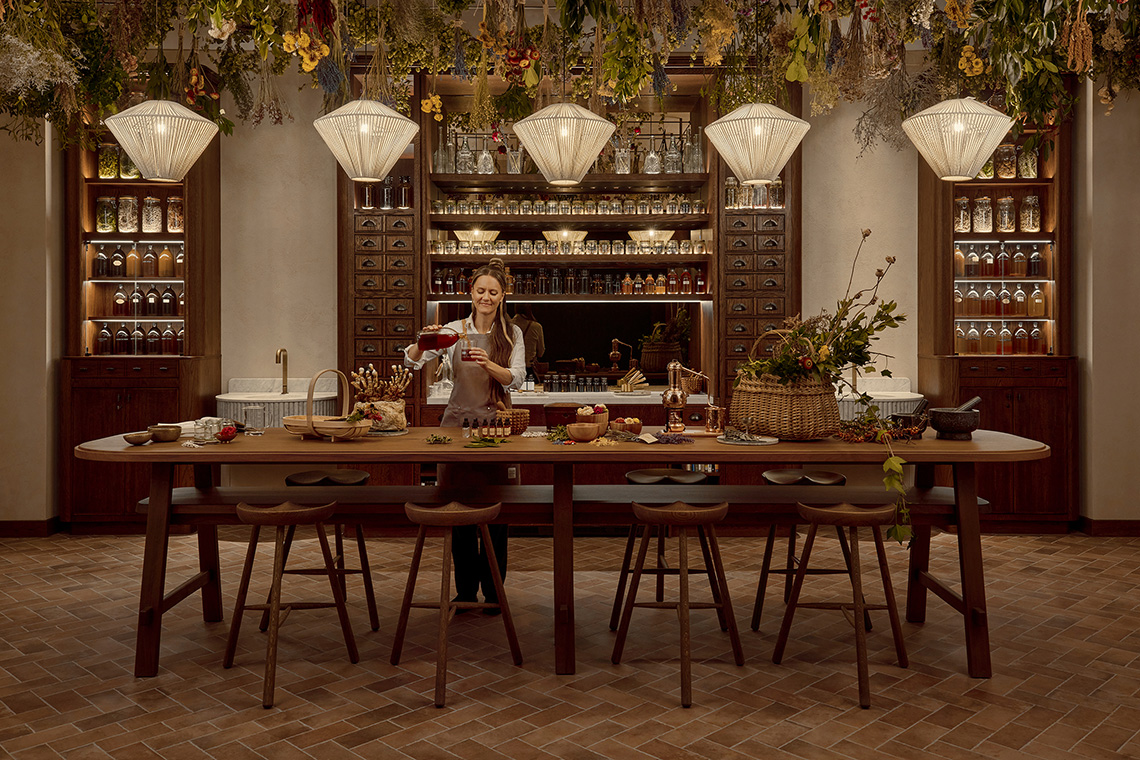
One of the main features of the hotel is the ‘apothecary bar’, where certified medical herbalists craft tinctures unique to each guest. As we begin to understand how commercial products can often pollute our own bodies as well as the environment, learning about alternative methods is essential. For this reason, the sessions in the ‘Earth Lab’ are designed not only to benefit the planet, but the person who attends them. Replacing clingfilm with beeswax wrap, for instance, reduces plastic pollution in your food as well as the environment. A core mission of the hotel is education; by teaching participants how to make alternative products themselves, environmentalism and health awareness are made accessible.
Their focus on symbiosis can illustrate why the Six Senses sustainability policy is so interested in community, and interaction with the space that it occupies. A sustainability tour is conducted for guests as a part of the weekly activity calendar, which starts by rooting itself in the history of Bayswater, remembering the lost springs and rivers which still flow beneath us.
Local Initiatives
But what does all this really mean for the locals? Whilst the work that Six Senses does for sustainability may well be authentic and effective, if the initiatives remain enclosed within its own walls, then it is hard for the community to feel an immediate impact.
Initiatives that the Bayswater community might feel more directly are driven by the hotel’s ‘Sustainability Fund’, which directs 0.5 percent of revenue to exclusively benefit and support community-based projects. Already, Six Senses is working with the Holland Park Ecology Centre to create a high-density urban forest, planting 600 trees in a neglected parklet on Elkstone Road later this year. This is just the beginning of the impact the hotel wishes to have on the local area.
With Kew Gardens as their science advisor, Six Senses will act as a keeper of local native seeds, hosting a repository which local gardens can add to and trade with.
Six Senses participated in the local recruitment event in 2025, which provided the opportunity for residents to apply for jobs in The Whiteley. A number of locals were recruited as a result, bolstering the connection between the hotel and the community.
On a broader scale, the hotel’s restaurants support UK-based food producers, with their menus adapting to seasonal availability. The Head Chef spent two years visiting farms around the South of England sourcing produce for the restaurant, forging a direct connection with the food. Local produce includes burrata made at Royal Oak, just half a mile down the road.
Connection to community
Whilst the conservation projects already initiated by the hotel evidence their commitment to local involvement, creating a relationship with the community and overcoming the current will take more time. The current disconnect between residents and the new ‘Whiteley’ is a result of years of construction and frustration, but such detachment need not continue. Six Senses London desires to be a community hub, and locals are encouraged to interact with it as such.
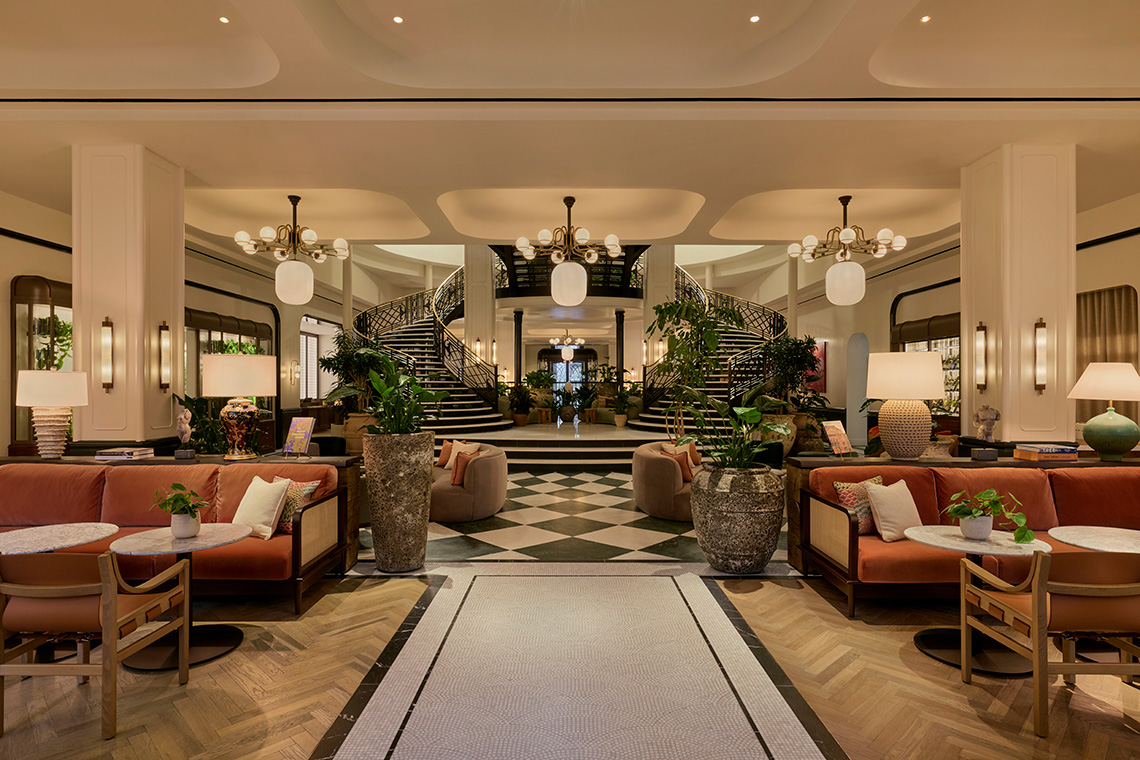
Although a luxury hotel can feel intimidating, it is important to remember that the hotel is an accessible space. There is nothing to stop one from stepping through the doors and admiring the grand marble staircase that we all remember from the original interior, painstakingly restored and reassembled, as magnificent as ever. In particular, the courtyard becomes increasingly enticing as summer fast approaches: although previously closed off during construction, it now welcomes locals in with outdoor seating secluded from the hubbub of the street.
Of the facilities offered by the hotel, there is much accessible to the locals. For a luxury hotel, the restaurant is designed to be very reasonably priced, especially considering the quality and traceability of the food. Similarly, the calming and unhurried atmosphere of the café creates an experience that accounts for a slightly higher cost.
Their retail boutique has been carefully curated to feature hyper-local products: many of the brands offered have connections to Bayswater, whether operating or founded in the local area. The selection encompasses a wide range of price points, from greeting cards to high-end jewellery.
The alchemy bar, which is open to walk-ins, would cost around £95 for an in-depth health consultation with resulting tinctures charged as extras. The programming team is also looking to trial special fitness classes open to Bayswater Residents.
While the Earth Lab workshops are not currently open to the public, they aim to be so later this year, and would provide a lovely activity for a group of friends or family. The session would be well worth its £30, teaching cost-effective ways to care for yourself as well as the environment.
For a hotel, the ultimate sign of sustainability is its connection with the community in which it rests. Six Senses is dedicated to forging this connection, and keen to hear from the locals. The hotel is particularly seeking ideas for itsz Sustainability Fund, or local conservation projects which would be appreciated by the community. Please contact the Bayswater Residents Association and we will ensure that Six Senses are aware of your views.
Whiteleys has shaped this corner of London for over a century — and in its latest incarnation, The Whiteley, doesn’t just revive the building but reimagines what Bayswater might be.